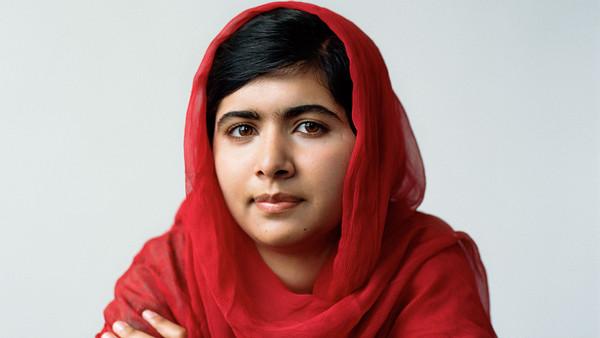
Thursday, October 16, 2014

Inequality Kills

Today I am participating in Blog Action Day 2014 where bloggers around the world are participating in a global conversation about Inequality.

The official Blog Action Day hashtags are #BAD2014, #Inequality and #BlogAction

@blogactionday12


This is a great video about global inequality, made in response to this famous video about American inequality.

Global inequality


American inequality


Income inequality kills

Pope Francis on the immorality of inequality (my emphasis added)
Pope Francis also spoke out against what he called "savage capitalism," which he said exploits people to rake in more profits. He condemned what he called the "dictatorship of economy" and the "cult of money".....He also expressed disappointment in what he called the "tyranny of markets." The pope said that an economy of exclusion on inequality kills....."How can it be that it is not a news item when an elderly homeless person dies of exposure, but it is news when the stock market loses two points?"

Economic inequality is bad for many reasons.  It slows down the economy when people do not have enough money to spend on things they need and want.  The economy relies on manufacturing products, and then having people available to buy them.  That is supply and demand.  There are things that people need to survive, food shelter, clothing, medical attention, and things that improve the quality of life, education, entertainment, chocolate.  There are people that make money producing and supplying these products to meet demands of the consumers.

Anyone paying attention since the Great Recession of 2008 knows this about the economy, and the exponential effect, downwards or upwards, that a change in confidence in the economy and money supply can have on business and people around the world.

There is a crisis of confidence in a company, a sector of the economy, fear grows, layoffs begin, companies close, the crisis spreads, banks stop lending.

Recessions have long lasting effects even after they are declared over, as we see from the current recession, which "ended" in June 2009, is still being felt today, as fast food workers protest for a minimum wage raise to $15 an hour, and that wages are stagnant even as "employment is growing at a healthy clip, with 248,000 jobs created this month, and an average of 220,000 jobs created each month over the past year."
The median net worth of families in the middle 20 percent of incomes fell 17 percent from 2010 to 2013, according to the Federal Reserve's Survey of Consumer Finances.
Democrats since 2008 have been saying that raising the minimum wage would be good for businesses and the economy, because low income families would be able to afford to buy more, increasing demand and leading to increased employment.  Now finally even businesses are worried.
Sixty-eight percent of the top 100 retail companies in the U.S. -- a group that includes, Walmart, Apple, McDonald's and J.C. Penney -- say the country's stagnant wages pose a major threat to their bottom lines.

when before the Recession
only half as many top 100 retailers identified flat wages as a business risk in 2006, the year before the Great Recession.
While the White House has been campaigning for an increase in the minimum wage to $10.10 an hour (implemented over the next 3 years), many around the country, like Seattle, are not waiting for Congress to pass an increase, and are not increasing only to $10.10, but many are going to $15 (based on size of business).

Seattle $15 Implementation


Naomi Klein on Global Warming versus Capitalism
“Capitalism is a machine based on short-term profit and growth and the climate needs us to contract,” said Klein

“Capitalism is a machine based on short-term profit and growth and the climate needs us to contract,” said Klein. “So you have this tension between a system that needs to grow, grow, grow indiscriminately, and a planet going, ‘Guys, I have had it.’” 
Lower wages, high costs, less access to healthcare, more stress, and the effects of global warming are all symptoms of poverty and inequality.  Now studies show that how long you live is affected by how poor or rich you are.  (And it is worse for women than men.  This is "the ultimate cost of income inequality.")
wealthy Americans are even enjoying longer lifespans than lower income Americans.....
new analysis conducted by Barry Bosworth and Kathleen Burke shows the average American man in the richest 10 percent category can expect to live another 35 years after he becomes 55 years old.

However, the 55-year-old average American man in the poorest 10 percent category only has about 24 years left.
Here are 7 reasons why the rich live longer (FAZ in German)


Besides even the statistics showing inequality negatively impacts quality of life through stress, bad health, crime, global warming, and other issues hard to quantify, there is now evidence linking the Recession to an increase in suicides.
The recent recession can be linked with over 10,000 suicides across Europe and North America between 2008 and 2010.....suicide rates rose significantly in the EU, Canada and the USA after 2007, with the increase being four times higher among men.....job loss, home repossession and debt are the main risk factors leading to suicide during economic downturns.

The recent Sottish independence referendum was seen by some as a referendum on inequality
On the metric of income equality, the U.K. ranks 28th out of 34 members of the Organization for Economic Cooperation and Development (OECD), which has warned in recent years that income inequality is growing faster in Britain than in any other wealthy nation.
Now, many Scots want out. On Thursday, voters in Scotland will answer a straightforward Yes/No question: “Should Scotland be an independent country?” If the answer is ‘yes,’ then Scotland will declare independence and a 307-year-old union will be torn asunder. The U.K. will lose a third of its landmass and almost 10 percent of its population.....In some quarters, the vote is already being hailed as the world’s first-ever referendum on economic inequality—an event that has less in common with other nationalist votes like Quebec's in 1995 than it does with recent developments such as Occupy Wall Street, the adoption of “the 1 percent” as a global catchphrase.

The United Kingdom was the only state in the G7 to see a rise in inequality
Britain is the only G7 country where inequality has grown since the start of the 21st century, according to a report by Credit Suisse.....By contrast, all other G7 member states (US, Japan, France, Germany, Canada and Italy) have seen wealth inequality either remain the same or fall since 2000.
the anti-poverty charity Oxfam found Britain’s five richest families are worth more than the country’s poorest 20 percent.
Oxfam’s head of inequality, Emma Seery, said: “These figures give more evidence that inequality is extreme and growing, and that economic recovery following the financial crisis has been skewed in favor of the wealthiest.”

Kshama Sawant, the Socialist city councilwoman in Seattle responsible for passing the $15 an hour minimum wage bill, explained another way that inequality kills on Democracy Now.
If you look at the extreme suffering that is being meted out to the people in Pakistan, Afghanistan, the Middle East, all the places which have been the target of the brutal imperialism from the West, the bloodbath that Iraq is going through, where is the solution to all of this? The only solution can be on the basis of rejecting capitalism, the system that, you know, means that a few billionaires and a few ruling-class politicians at the top get to decide how they’re going to divide up the world’s resources and go to war in that process. And who fights the wars? It’s the poor of the United States. Who dies in the war? It’s the poor of those countries. So I think she brings a message of solidarity that we need to recognize, that our solidarity lies not only as American working people, but as working people globally against a system, against a billionaire class that is continuing to exert such brutality and really miserable conditions for most of us.
 Inequality kills.  Join us in fighting it.

Oxfam


Tuesday, October 14, 2014

See? I'm not the only one either

I'm not the only one who points out those not popular in the mainstream media.

I have just published this post about Malala's friends who were also shot by the Taliban, and I go to Twitter and see this by Vijay Prashad.


I will remember their names.


See this post on Syrian journalists too.


These were my thoughts when Steven Sotloff was killed by ISIS.


Not Just Malala

I often get frustrated when a new news story pushes other stories off the radar.  I also get frustrated when the media focuses only on one or two people when others get ignored or forgotten by the media for various reasons.

I am proud of Malala, and glad she won the Nobel Peace Prize (along with Kailash Satyarthi, another person not well known until this week)

So let's shine some attention on Malala's friends.

They were shot too

Shazia Ramzan
Shazia Ramzan CBS NEWS (photo)
Shazia Ramzan


Kainat Riaz
Kainat Riaz CBS NEWS (photo)
Kainat Riaz


The Other Girls on the Bus: How Malala’s Classmates Are Carrying On
Shazia Ramzan and Kainat Riaz were also injured in the attack on Malala Yousafzai. And they are back in school to continue their friend’s quest


An excellent 14 minute video from BBC (I could not find how to embed this video)
Battle over girls' education in SWAT


Here is the full program


Here is another short interview


Saturday, October 11, 2014

Obama hates war but...

This is still a work in progress.

I've been wanting to write this piece for awhile now, comparing how the media portrays Obama's record on war to his real record as President.

A quick version would go something like this.

Obama hates saying the word war but....doesn't mind doing it

For example he often cloaks war in euphemisms or in smaller scale, reminding Americans that he is cautious not to repeat Bush's mistakes.

Obama expanded American airstrikes and other military actions and talked of preventing the massacre as examples of how he talks about war.
President Obama said he was ordering an additional 475 service members to Iraq, bringing the total rushed there to about 1,500 troops. But the president repeatedly promised that the American troops – scores of whom will advise Iraqi forces – “will not have a combat mission.”
Three years ago, President Obama declared “the tide of war is receding.” He would have a hard time making that claim today. 

The pre-emption doctrine, circa 2002, lives in 2014......This is not the first time Mr. Obama has invoked the pre-emption doctrine: It was the fundamental legal justification for most drone attacks and special forces raids. But Wednesday evening, it became part of an expanded mission

When Mr. Obama says the effort “will be waged through a steady, relentless effort to take out ISIL wherever they exist,” he is essentially saying that borders will no longer limit him.

Still Republicans criticized his speech (here's Charles Krauthammer)
And beyond the strategy’s halfhearted substance is its author’s halfhearted tone. Obama’s reluctance and ambivalence are obvious. This is a man driven to give this speech by public opinion.
continued
You could sense that Obama had been dragged unwillingly into this new unproclaimed war. Which was reminiscent of Obama’s speech five years ago announcing the surge in Afghanistan. In the very next sentence, he announced a fixed date of withdrawal. Then added, lest anyone miss his lack of enthusiasm, “The nation that I’m most interested in building is our own.”
Meaning, not Afghanistan
At the time, I called it the most uncertain trumpet ever sounded by a president summoning the country to war. I fear the campaign against the Islamic State will be a reprise. 

Here are politicians from both parties reacting to his speech

House Speaker John Boehner praised the speech a little, then said a speech is not a strategy, then said it was
a cause for concern that the president appears to view the effort against ISIL as an isolated counterterrorism campaign, rather than as what it must be: an all-out effort to destroy an enemy that has declared a holy war against America and the principles for which we stand.
Senate Majority Leader Harry Reid said
“Tonight the President laid out a strong and decisive strategy to destroy ISIS without repeating the mistakes of the past in the Middle East.
Senator John McCain (at least quoted here) went straight to the point
“I think it was a very weak argument."
Somewhat surprisingly, Huffington Post asked someone not currently in political office (but may soon try again) who as a Republican, still liked it.
Former House Speaker Newt Gingrich called the speech "the most explicitly pro-American speech" President Barack Obama has ever given.
Senator Dick Durbin brought up the need for legal authorization, but still supported his President
"I commend the President for clearly presenting to the American people his strategy for leading a multinational force to confront this barbaric terrorist organization known as ISIL.
Retiring Representative Mike Rogers supported the President
“The President is to be commended for his decision to take action against ISIL targets, wherever they are, including Syria.

So there are some Republicans offering support, others criticize Obama, some do both, and Democrats largely support their President's war even as many criticized Bush's wars more resolutely.

Roll Call noted similarities in responses to the speech.

But I don't see a reluctant warrior at all.


Obama in May at West Point Graduation
Mr. Obama disputed critics who say his cautious response to crises like Syria’s civil war and Russian aggression toward Ukraine had eroded America’s leadership in the world. Those critics, he said, were “either misreading history or engaged in partisan politics.”
But for a president who has promised to take the United States off a permanent war footing, Mr. Obama painted an unsettling portrait of the world, 13 years after the attacks of Sept. 11, 2001. The nation, he said, had, in effect, traded Al Qaeda in Afghanistan for a more diffuse threat from extremists in Syria, Nigeria, Somalia, Yemen, Mali and other countries. 


He is portrayed as hesitant to use military force, reluctant to project power abroad, leading from behind, weak on foreign policy, Romney in 2012 accused Obama of going on "apology tours." Recently with the war on ISIS he has been called a "reluctant warrior" on almost every news network.

I will show you how while not saying the word "war," instead using words like hostilities, strikes, Administration officials use words like kinetic action to describe bombs, airstrikes, etc.

Obama has said repeatedly that he is a war president, but few seem to listen.  Republicans don't think he's bombing enough, and Democrats only hear him repeat that he was "elected to end wars not start them."

This was from his ISIS speech on September 10th
I have made it clear that we will hunt down terrorists who threaten our country, wherever they are. That means I will not hesitate to take action against ISIL in Syria, as well as Iraq. This is a core principle of my presidency: If you threaten America, you will find no safe haven.
The Daily Beast on Obama's expanding war on ISIS.
At first Obama asserted his authority to unilaterally authorize airstrikes in Iraq because as the commander-in-chief of the U.S. military, he had a responsibility to protect U.S. citizens and facilities
But almost as soon as he began the air campaign, Obama’s war got much broader. By the end of August, U.S. aircraft were striking ISIS targets in Iraq near the Mosul dam to protect Iraq’s critical infrastructure. In a few short weeks, the initial narrow aims of the war had expanded.
Now Obama seeks to expand that war even more. Addressing the nation Wednesday evening he said he reserved the right to strike ISIS targets in Syria. “I have made it clear that we will hunt down terrorists who threaten our country, wherever they are,” he said.
I completely disagree with Benjamin Wittes argument here
Benjamin Wittes, a senior fellow and research director in public law at the Brookings Institution, said the legal argument was a “very thin reed.”
“If they are relying on the 2001 AUMF for this, then what the president is saying is, essentially: This war, like all wars, must end; we can’t have endless wars; stop me before I sin again,” he added.
I believe that I will show that Obama is using the 2001 AUMF (as well as 2002 Iraq War Authorization) to justify war anywhere.  Besides US law, there is also the issue of international legal justification for war.
Obama’s legal issues are not confined to U.S. law either. The administration has not explained how the strikes accord with international law.
According to the U.N. Charter, “All Members shall refrain in their international relations from the threat or use of force against the territorial integrity or political independence of any state.” Exceptions are granted for self-defense, or when the U.N. Security Council specifically authorizes it. The Obama administration worked hard to secure a U.N. Security Council resolution before using American military force inside Libya in 2011.
Washington in the past has also used international humanitarian law to justify use of military force without U.N. endorsement—for example, when U.S. forces attacked Serbia during the Clinton administration. President Obama said Libya had to be attacked to avert a genocide in Benghazi.
In Iraq, Yemen, and Somalia, host governments invited U.S. forces in, as opposed to Syria. But President Obama is not seeking any U.N. Security Council permission for this fight. He is not seeking permission from the government in Damascus to conduct airstrikes, and he is not asserting that the strikes are needed for humanitarian purposes. A draft U.N. Security Council resolution circulated this week makes no mention of authorizing such a war.

Not only is Obama not reluctant to fight wars, the only thing he does seem reluctant about, or arguing that he doesn't need or already has is any legal authority, either Constitutional or international.


EARLIER DRAFT

President Obama has been seen at least in the Mainstream media as a President who is a "Reluctant Warrior," hesitant to commit troops to Afghanistan past 2014, hesitant, unbearably light, unserious.

Syria's Foreign Minister said (in 2013) that
President Barack Obama is "hesitant" and "confused" after he postponed a threatened military strike on the regime to seek Congress approval.
While Obama was "hesitant" and confused" in 2013 to bomb the Syrian government without Congressional approval, he has just begun bombing ISIS (and Khorasan) without any approval from Congress.

"weak on foreign policy" Free Beacon
Rep. Paul Ryan (R., Wis.) took direct aim at President Barack Obama’s “weak and indecisive” foreign policy approach

Friday, October 10, 2014

Peace in Oslo, War in Kashmir

Congratulations to Pakistan's Malala Yousafzai  and India's Kailash Satyarthi on winning the 2014 Nobel Peace Prize, breaking on Twitter now.


But there is a sad, bitter irony in the wonderful news from Oslo, the awful news from India and Pakistan, as heavy fighting has been going on for more than a week.


Malala Yousafzai


Pakistani teen, Indian children's right activist win Nobel Peace Prize

(Reuters) - Pakistani teenager Malala Yousafzai, who was shot in the head by the Taliban in 2012 for advocating girls' right to education, and Indian children's right activist Kailash Satyarthi won the 2014 Nobel Peace Prize on Friday.

With the prize, Yousafzai, 17, becomes the youngest Nobel Prize winner, eclipsing Australian-born British scientist Lawrence Bragg, who was 25 when he shared the Physics Prize with his father in 1915.

Satyarthi and Yousafzai were picked for their struggle against the suppression of children and young people, and for the right of all children to education, the Norwegian Nobel Committee said.

"The Nobel Committee regards it as an important point for a Hindu and a Muslim, an Indian and a Pakistani, to join in a common struggle for education and against extremism," said Thorbjoern Jagland, the head of the Norwegian Nobel Committee.

"It has been calculated that there are 168 million child laborers around the world today," Jagland said. "In 2000 the figure was 78 million higher. The world has come closer to the goal of eliminating child labor."

Nobel Peace Prize Awarded to Malala Yousafzai, Kailash Satyarthi
Activists Recognized for Struggle Against Suppression of Children
OSLO, NORWAY—Indian children’s rights activist Kailash Satyarthi and Pakistani schoolgirl Malala Yousafzai have been awarded the Nobel Peace Prize for their struggle for education and against extremism.

The pair were recognized “for their struggle against the suppression of children and young people and for the right of all children to education,” the Nobel Committee said Friday.
More
Q&A With Kailash Satyarthi
Malala Yousafzai’s Year in Photos (10/9/13)
In Swat, Battle for Girls’ Education Continues (10/9/13)
Ms. Yousafzai, 17, was shot in the head by Taliban fighters in the Pakistani Swat Valley two years ago and has since heroically fought for girls’ rights to education “under the most dangerous circumstances,” the committee said.
Mr. Satyarthi, 60, has been active in the Indian movement against child labor since the 1990s and contributed to the development of important international conventions on children’s rights, the committee said.
The five-member committee picked the winner out of a record 278 nominations that included former U.S. intelligence contractor Edward Snowden and Pope Francis. The committee has come under fire in recent years for selecting winners such as the European Union in 2012 and U.S. President Barack Obama in 2009, but the 8 million-kronor ($1.1 million) cash award is still considered one of the most prestigious honors in the world.
Kailash Satyarthi


Who is Kailash Satyarthi ?
Many would have heard his name for the first time after the announcement of the announcement of the Nobel Peace Prize on Monday. But Kailash Satyarthi has been a relentless crusader of child rights for years now. His organisation New Delhi-based Bachpan Bachao Andolan has been at the head of the fight against child labour by creating domestic and international consumer resistance to products made by bonded children, as well as with direct legal and advocacy work. Through a number of training programmes, Satyarthi also helps children sold to pay their parents' debts to find new lives and serve as agents of prevention within their communities.
RFK Center for Justice and Human Rights
Kailash Satyarthi won the 1995 Robert F. Kennedy Human Rights Award for his focus on India and Nepal. He is also a Speak Truth To Power Defender.
Satyarthi is India’s lodestar for the abolition of child labor. Since 1980, he has led the rescue of over 75,000 bonded and child slaves in India and developed a successful model for their education and rehabilitation. Kailash has emancipated thousands of children from bonded labor, a form of slavery where a desperate family typically borrows needed funds from a lender (sums as little as $35) and is forced to hand over a child as surety until the funds can be repaid. But often the money can never be repaid—and the child is sold and resold to different masters.
continued
AWARDS
• International Peace Prize – Germany (1994)
• Robert F. Kennedy Human Rights Award - USA (1995)
• Trumpeter Award – USA (1995)
• Golden Flag Award – The Netherlands (1998)
• La Hospitalet Award – Spain (1999)
• Friedrich Ebert Stiftung Award – Germany (1999)
• Raoul Wallenberg Human Rights Award - USA (2002) and
• Freedom Award – USA (2006)
• Heroes Acting to End Modern Day Slavery - USA (2007)
• Medal of the Italian Senate – Italy (2007)
• Alfonso Comin International Award - Spain (2008)
 So there is peace in Oslo for India and Pakistan.....meanwhile in India and Pakistan....

India and Pakistan trade blame over shelling across disputed Kashmir border
Leaders in India and Pakistan traded blame Thursday for cross-border attacks that officials said have killed at least 18 civilians in recent days and forced thousands from their homes.

Villagers in the disputed Kashmir region have fled an unusually intense spate of mortar shelling that has gone on for more than a week along the border, one of the most highly militarized zones in the world. It is some of the worst violence between the nuclear-armed neighbors since a 2003 cease-fire.
continued
In Pakistan, a military spokesman said 10 Pakistani civilians had been killed and more than 42 injured during the shelling.

“During the last three days, Indian troops are repeatedly resorting to unprovoked firing,” the spokesman said. Pakistani troops are meeting the fire with “an effective response,” he added.

The United Nations has expressed concern about “the recent escalation of violence.” The U.N. secretary general wants both nations “to engage constructively to find a long-term solution for peace and stability in Kashmir,” his spokesman said in a statement Thursday.
continued
The two countries have struggled over their disputed border and the territory of Kashmir — including in two wars — since Muslim-majority Pakistan was carved out of Hindu-dominated India in 1947.
The escalating border crisis is the first between the countries since Indian Prime Minister Narendra Modi, a Hindu nationalist, took office in May. Modi had made a point to invite Pakistani Prime Minister Nawaz Sharif to his swearing-in, but the goodwill faded when border clashes erupted in the summer. 

As I'm working on this post there is an announcement of a brief pause after more than a week of fighting

Pause in India-Pakistan fighting brings respite for civilians
SRINAGAR Fri Oct 10, 2014 11:27am BST

(Reuters) - Fighting between India and Pakistan paused on Friday after days of heavy shelling and gun battles across their disputed Himalayan border in Kashmir, the worst skirmishes between the nuclear-armed rivals in more than a decade.
Despite escalating tensions, Pakistan said war with India was not an option and that both sides should work to try and defuse the conflict.
The lull came a day after a heated exchange of rhetoric, with New Delhi warning Pakistan it would pay an "unaffordable price" if shelling and machinegun fire continued. Islamabad had said it was capable of responding "fittingly" to aggression.

Nine Pakistani and eight Indian civilians have been killed since both sides' security forces started firing more than a week ago along a 200-km (125-mile) stretch of border in mostly Muslim Kashmir."It was calm along the Jammu border during the night, there was no firing in any of the sectors," said Uttam Chand, an Indian police officer, referring to the southern, predominantly Hindu part of the region. India and Pakistan have fought three wars since their independence in 1947, two of them over Kashmir. Their shared border is among the most heavily militarised in the world and travel between the two nations is severely restricted.

India and Pakistan trade warnings over heavy Kashmir fighting
ARNIA India/MUZAFFARABAD Pakistan Thu Oct 9, 2014 7:34pm IST
Nine Pakistani and eight Indian civilians have been killed since both sides' security forces started heavy shelling more than a week ago along a 200-km (125-mile) stretch of border in the disputed, mostly Muslim region of Kashmir.

More were injured on Thursday. Both countries accused each other of starting the latest hostilities that have hit heavily populated civilian areas. India says it will not talk to Pakistan or stop firing until its neighbour backs down first.
2 more killed along border--Dawn News Pakistan
SIALKOT: At least two people were killed in Sialkot on Thursday in latest firing by Indian troops along the working boundary between India and Pakistan raising the number of deaths in the past few days to 12 and injured to 43, sources in the Chenab Rangers said, adding that they retaliated the attack.
Several buildings were also damaged during the incident and the exchange of fire was ongoing at the time of the filing of this report.
The deceased include a man and a woman who were killed when hit in the Harpal village of Charwah Sector. Moreover, one person was injured in the incident.
Most intense fighting in decade--India Today
The Pakistani media said that at least 10 civilians were killed and dozens of others injured in the fighting along the Line of Control (LoC) since last Sunday. The fighting reportedly started in Jandrot sector and reportedly spread to adjoining sectors.
The worst-affected sectors were Harpal, Dhamala and Charwah, Jandrot (Kotli), Hot Spring (Bagh) and Beduri (Rawalakot), the Dawn said.


Five more civilians killed in worst India-Pakistan fighting for years

SRINAGAR/DHAMALA Wed Oct 8, 2014 1:15pm EDT
A senior official with the border security force said Indian forces had retaliated for machine gun and mortar attacks on about 60 positions along a more than 200-km (125-mile) stretch of the border on Wednesday.
Some 18,000 Indian civilians have fled their homes in the lowlands around Jammu to escape the fighting, taking refuge in schools and relief camps.
continued
The fighting comes at a time of changing power dynamics in South Asia, with Pakistan's army taking a more assertive role in politics and India's new nationalist Prime Minister Narendra Modi promising a more muscular foreign policy.

Pakistani Prime Minister Nawaz Sharif has been weakened by opposition protests that started in August. He won the army's backing but in the process ceded space to the generals on some issues, including relations with India.

Modi is following through on a promise to take a harder line with Pakistan in its border disputes after being elected in May. Although Sharif came to Modi's inauguration, the Indian leader has since cancelled a round of talks with Pakistan, and in a further snub did not meet Sharif at a U.N. meeting in New York in September.

Peace prizes in Oslo for an Indian and a Pakistani, and war for those along border in India and Pakistan.

Work for peace!  

British Social Media Surveillance

This certainly caught my attention on Twitter today.  We all hear about NSA and GCHQ thanks to Edward Snowden's important leaks.  This is just one family's story.  It is important to focus on both the abuses of mass surveillance and the effects it has on individual people being violated.
The ethics of health organisations monitoring social media
Last year, Connor became unwell and was admitted to an assessment and treatment centre. 107 days later he drowned in the bath. He had epilepsy and Sara had noticed an increase in his seizures and alerted staff. But he was allowed to bathe unsupervised. Now her blog is about what Sara is learning since his death.
continued (original emphasis, not mine)
Today's post on Sara's blog is about the memo that was circulated the day after Connor's death by the communications department of the health trust, to brief staff about Sara's blog and provide a summary of posts with the aim that it might "help in shaping a tailored media response". Sara obtained this memo today through a Freedom of Information request. It details how Sara's blog had been monitored by the comms team from as soon as they were aware of it in March 2013 shortly after his admission to the unit. It specifically mentions this post in May 2013 just over half way through Connor's admission, where Sara described her distress at realising that Connor had a seizure but not being able to convince the staff that this was the case. Last week Sara was told by the Chairman of the Board that there had been no monitoring of her blog.
continued
Link: An excellent post by Tim Turner on the data protection aspect of this social media monitoring.

From Sarah's blog post
Just when you think you’ve waded through the worst of the shite, another FOI request pings in. [From the CCG, not from Sloven]. This one includes the Background Briefing on mother’s blog.  Written the day after the day after LB died. And yet they have not 16 months on disciplined staff.
continued
And Simon Waugh, Board Chair, telling me categorically last week there was no surveillance…
Here it is. No words really.
a portion from the memo


BBC report on Connor's death February 25 2014
The death of a teenager being cared for at an Oxfordshire in-patient unit for people with learning difficulties was "preventable", a report has concluded.
Connor Sparrowhawk, 18, was found unconscious in the bath at the unit in Slade House, Headington, on 4 July and died the same day in hospital.

A tailored media response OCTOBER 9, 2014
Yesterday, Sara Ryan posted – with understandable fury – information she had obtained via Freedom of Information about monitoring of her blog by Southern Health NHS Trust. It’s difficult to quickly summarise the story of Ryan and her son Connor, but the crucial fact for my comments here is that Ryan writes a compelling blog, which used to be about Connor’s learning difficulties, and which became a heartbreaking and angry chronicle of what she has experienced following Connor’s preventable death in a Southern Health treatment centre.
continued
It seems almost distasteful to find a data protection angle in the story, but nevertheless, the cause of Ryan’s anger this week should echo loudly through all organisations that deal with the public, and especially with their Data Protection officers.

Ryan’s blog reports that last week, the board chair, Simon Waugh, told her that there had been no surveillance of her blogging. This week, she received information from the Clinical Commissioning Group that told another story. A report was written by Trust the day after Connor died. The aim was to “help in shaping a tailored media response to the incident and monitoring of potential media interest in the incident“. Always good to get your priorities right.