Showing posts with label Police. Show all posts

Sunday, May 3, 2015

2015 is our Superbowl says TASER

One of the popular solutions to police brutality seems simple.  Film the police.  (Another is non-lethal weapons like Tasers, but that is not entirely true either) Pass laws that put a body camera on every officer when they are on duty.  There's the study from California that "proves" how great they are at reducing violence by police and complaints by the public.

Although many police accountability activists argue for body cameras, we also acknowledge, even before Eric Garner, that video alone is not enough to guarantee justice.

Back in December Obama was considering asking for $263 million to study and buy body cameras. Now the program is still going forward, but the total has dropped to $75 million over 3 years.
The Justice Department announced it is providing $20 million to police departments for body cameras, the first installment in a three-year program budgeted at $75 million.
"Body-worn cameras hold tremendous promise for enhancing transparency, promoting accountability and advancing public safety for law enforcement officers and the communities they serve," Attorney General Loretta Lynch said.
White House spokesman Josh Earnest said the program will help jurisdictions with the purchase of 50,000 body-worn cameras and provide evaluations of how well the program works.
Hillary Clinton is on board
Democratic presidential front-runner Hillary Clinton said on Wednesday that the United States should make sure every police department has body cameras.
clarification of what the program will do (DOJ press release and fact sheet, however here are the full details by BJA)
The federal funding will match local funds and be available only to departments that already have body camera policies in place, the Justice Department said in a fact sheet.
It will match funds dedicated to buying cameras and training police on how to use them, but not for storage of the footage they capture, which can often make up the bulk of the cost.
Applicants for grant money for body cameras have to meet the requirements and apply before June 16th to be eligible.

The Program will be run by
the Bureau of Justice Assistance (BJA) under the Justice Department’s Office of Justice Programs (OJP)
So everyone agrees moving forward with funding body cameras for police is a great idea to address police brutality and civilian complaints, including TASER, the non-lethal weapon maker and body camera company.

2014 Annual Report 
Our bookings of new business grew nearly 300% from $14 million in 2013 to $57 million in 2014. And we won every major city account which made a new system selection for wearable video in 2014.
We have said that 2015 is our Superbowl; we are out to win the largest accounts in the United States in on-officer video and EVIDENCE.com to enable our platform to become the first technology platform that is ubiquitous across the public safety community. Growth is exciting but in truth, our zeal for technology is based on our passion for what our customers do every single day: protecting life and protecting truth. 
Luke Larson is the Chief Marketing Officer and President of TASER since April 6th 2015 and is an Iraq war veteran.  But why is he getting 10,000 stock shares base on how much body camera footage is uploaded to TASER's evidence.com website?

see footnote for Luke Larson (page 35, PDF page 43)
(9) These stock awards are performance-based, and vest in full when a specified threshold is met related to camera video uploads into EVIDENCE.com
What IS the threshold?


TASER's video discussing their own grant program for police explains that storing body camera footage on dvds is clumsy when you need to share footage as evidence.  It also prevents Luke Larson from getting his threshold met.

Bloomberg: May 1, 2015 TASER stock "closed at a 10-year high Friday as the federal government said it planned to spend $20 million on such devices for police departments.....The shares rose 7.2 percent to close at $32.37 on Friday, their highest point since December 2004.

SCANDAL! Yahoo: "Abandoning a practice that has faced criticism, Taser International will no longer hire police chiefs with whom it has business relationships within weeks or months after they leave public service......In all three cases, their departments had signed major contracts with Taser to purchase body cameras and video storage software, Evidence.com. Within months, the former chiefs were paid to travel and speak about how those tools were the future of policing"

Atlantic The Big Money in Police Body Cameras: Taser International stands to profit enormously from the country's fast adoption of police-worn cameras.

CNETUnrest in Baltimore means big business for Taser
shares have risen more than 160 percent since the August shooting death of Michael Brown in Ferguson, Mo. -- better than some of the largest tech companies in Silicon Valley, including Apple, whose iPhones propelled its shares more than 36 percent over the same time, and video streaming service Netflix, whose shares have risen nearly 25 percent. Shares of a Taser competitor, Digital Ally, have risen nearly fourfold.
Let TASER make money for a good product.  But there has to be more competition.  They are cornering the market right now.


Can we do public safety without capitalism (and politics) please? Once?


Wednesday, October 8, 2014

Just wait, it gets worse

I wrote in August after the shooting of Mike Brown and protests in Ferguson about how the police cannot handle simple things--not hostages, terrorism, bank robberies, high tension situations that can go wrong and we could imagine giving police some slack if honest mistakes were made.

Besides the long list of unarmed black men killed by police (and vigilantes) I included jaywalkers, peaceful protesters, mentally ill and babies.

(I also wrote a few posts about police shooting statistics and grant programs that give military equipment to police, most famously the Department of Defense's 1033 program.)

And now comes the ridiculous and sad part.  When talking about the federal programs that give military equipment to police I argued for ending the failed war on drugs.  I just didn't realize it was so bad.

Can police even handle dead people correctly?!

This is an urn, for holding the remains of cremated ashes of beloved family members who have died. It is not for holding drugs.

(photo)


From Wikipedia
Besides the traditional funeral or cremation ashes urns, it is also possible to keep a part of the ashes of the loved one or beloved pet in keepsake urns or ash jewelry.

Now before today I had never heard of ash jewelry, that is true, and I'm sure many of us remember Sarah Michelle Gellar's drugs necklace from Cruel Intentions, but seriously? Come on!

YouTube


So urns, ashes, necklaces, drugs.

Cops Dump A Murder Victim’s Ashes Alleging They Were Drugs
After he was cremated, his daughter, 25 year old Sarah Lewis, took a portion of the ashes and put them in a small cylinder on a necklace so that she could always have her father with her.
This is not even the only incident where law enforcement mistook ashes for drugs.  I will even admit that a necklace is not an ordinary storage container for ashes (again I just heard of it today).

This was not a necklace with questionable contents (father's murdered ashes) but an urn, a regular standard funeral urn--but wait the story gets "better," by which I mean more disturbing.

TSA Agents Unscrewed Urn Dumped Ashes of Man’s Deceased Mother In His Luggage During Search
Shannon Thomas....was intending to board a flight headed for San Juan, Puerto Rico, with a stop in Washington, D.C.
He was on his way to San Juan so he could spread his mother’s ashes, one of the final requests that she had made before her death.
When Thomas arrived in San Juan and recovered his luggage, he found the urn open and the ashes spilled all over the contents of his bag.  A TSA notice was place on top of the mess in his luggage, informing him that the contents of his bags were checked by agents.
This is comforting--TSA is ignoring their own guidelines on urns (emphasis mine)
According to the TSA’s own guidelines, agents are not permitted to open urns, but are instead required to use an X-Ray scanner too determine if there is a weapon or bomb hidden inside.  This same situation has actually occurred on multiple occasions, and sadly seems fairly common.  In 2012, it was reported that a man John Gross was traveling through Florida when TSA agents spilled the ashes of his grandfather.  In that case, the agent reportedly laughed as the man knelt down to clean up the ashes and bone fragments that they had spilled on the ground.
But wait, it gets worse
Sadly, police mistaking innocent items for drugs is extremely common. We adamantly recommend not consenting to searches or speaking to the police without a lawyer present, even if you’ve never done anything wrong.
On Saturday, we reported on a man who’s home was raided by a Georgia task force believing that the okra he was growing in his garden was marijuana.
Over the summer, an innocent woman was arrested and spent over one month in jail after dried Spagettio’s on a spoon were found in her car during a traffic stop.  The officer believed the tomato sauce residue to be drugs.
During the same month, we reported on rapper, Joe Mugga, had his rights violated when an officer mistook a french fry in the backseat of his car for marijuana, yes, you read that correctly.
Let’s also never forget the cop who mistook a Jolly Rancher candy for crystal meth.
For more information check out our Top 10 Reasons Not to Talk to Police and learn why consenting to searches and answering questions from police can never help you.


 Let's help the cops out shall we?

Not marijuana
photo


Not drug residue
photo


Not meth, crystal or otherwise
photo


This however, was a nice moment
YouTube


Justice for Mike Brown

Which side are you on?

Ferguson


Wednesday, September 10, 2014

End the War on Drugs

Yesterday the Senate Committee on Homeland Security and Governmental Affairs held a hearing on Oversight of Federal Programs for Equipping State and Local Law Enforcement under the Department of Defense Excess Property Program, known since the shooting in Ferguson Missouri of the unarmed black teenager Michael Brown as the 1033 Program

The 1033 Program has gotten the most attention, but it is hardly the only grant program available (NYT) to local police agencies that distributes either equipment directly or funds that can be used to buy equipment.

A list of grants available by agency is listed here by DOJ's NIJ

Other grant programs include 1033, 1122, Urban Areas Security Initiative (UASI), State Homeland Security Program (SHSP), Edward Byrne Memorial Justice Assistance Grant program

Website for Grants.gov has grants by agency and category, including DHS, DOJ and Law, Justice and Legal Services including grants like COPS-CAMP-APPLICATION-2014 from May for help to
engage in or to supervise anti-methamphetamine investigative activities
1122 Program Catalog of available equipment

Description of the 1122 program (paragraph edited by me)
Three sources of supply are available to law enforcement agencies through their SPOCs. The first two are the Department of the Army (DA) and the Defense Logistics Agency (DLA).
The third source is contractor-supplied items. These items are furnished through the General Services Administration (GSA) and the sources can be found in the various Federal Supply Schedules published by GSA. These schedules are listings of contractors, identifying the types of products they provide to GSA. There is a Federal Supply Schedule for "Law Enforcement & Security Equipment," for example, that gives the names and addresses of suppliers of police equipment belts, holsters, batons, handcuffs and pepper spray; accessories for police cruisers; alcohol detection kits; bomb disposal and detection equipment; and forensic and criminal investigation equipment. GSA also will purchase motor vehicles for law enforcement agencies under this program. For more information please visit http://www.gsa.gov/firesecurity.


There are 82 DHS grants listed on its website.

Investigative journalist Jason Leopold was able to get information through FOIA on the 1033 information from Ferguson and St Louis Police Departments.  In his article he noted the lack of evidence of distributions of the kinds of tactical equipment that was seen on the streets in Ferguson.
VICE News obtained the complete inventory of military leftovers secured since 2007 by the Ferguson Police Department under the DLA's 1033 program - and nothing on the list matched up with the militarized equipment police deployed during the protests.
continued
Even though Ferguson police did not obtain any weapons under 1033, the program - its maxim is "From Warfighter to Crimefighter" - does supply US law enforcement agencies with M-14s, M-16s, M1911 .45 caliber pistols, grenade launchers (see DLA's weapons inventory PowerPoint below) and armored vehicles.
continued
The obvious question: Where did Ferguson police get the military equipment it allegedly used during the protests, and how did the department purchase it? When VICE News posed the question to the Ferguson Police Department, an officer hung up the phone on us. Three subsequent calls back resulted in the same response.
From the August 27 article update 
The fact that the St. Louis County Police Department did not obtain tactical gear under 1033 is not to suggest that it doesn't have it. The department may have purchased military vehicles and weapons on its own or with grant money it secured from another federal program.
This is not a new problem.  While I was looking for Jason's article about 1033 I found this tweet mentioning this article from 2011 discussing the 1033 program, which was started in 1997 to help police agencies deal with the war on drugs.
The U.S. military has some of the most advanced killing equipment in the world that allows it to invade almost wherever it likes at will.

We produce so much military equipment that inventories of military robots, M-16 assault rifles, helicopters, armored vehicles, and grenade launchers eventually start to pile up and it turns out a lot of these weapons are going straight to American police forces to be used against US citizens.

Benjamin Carlson at The Daily reports on a little known endeavor called the "1033 Program" that gave more than $500 million of military gear to U.S. police forces in 2011 alone.
Back then the issue was the response to Occupy Wall Street
This upswing coincides with an increasingly military-like style of law enforcement most recently seen in the Occupy Wall Street crackdowns.
Along with Jason's work, the crowdsourcing FOIA website MuckRock also has documents that cover half of the states' 1033 programs.

Program 1033 aircraft, armored vehicle and weapons requests article
Requested by ShawnMusgrave on Oct. 7, 2013 for the Defense Logistics Agency, Disposition Services of United States of America and fulfilled on Dec. 9, 2013

Documents
DRMS-14-MFOI-00004

Any mention of Rifleman Sets refer to vests not weapons as far as I can tell--see here

Here is the New York Time's data set as described here
Last December, the Defense Logistics Agency released two years of state-by-state transfer data to MuckRock, while the New York Times obtained data down to the county level in May. 
The request filed for data from 1033 transfers nationwide 2000 to 2014 still is due in 4 days time so it is not late yet.  Many FOIA requests are held up for various reasons.

Missouri Senator Claire McCaskill has on her website an article/press release as well as her own fact sheet on 1033 Equipment transfers

This is not the first time that the militarization of the police has gotten widespread media attention, the last time being after the Boston Marathon Bombing last year, when Boston Police locked down Boston and several suburbs looking for the suspects.

Wikipedia
April 19, Governor Patrick asked residents of Watertown and adjacent cities and towns (Allston-Brighton, Boston, Belmont, Brookline, Cambridge, Newton, and Waltham) to "shelter in place". Somerville residents also received a reverse-911 call with orders to shelter in place. 
"Was Boston Actually on Lockdown?"
Throughout the day, the media described residents complying with a “lockdown order,” but in reality the governor’s security measure was a request.
The lockdown is really voluntary, to be honest with you,” says Scott Silliman, emeritus director of the Center on Law, Ethics and National Security at Duke Law School.
The “shelter in place” request is legally different from a state of emergency, which Patrick declared earlier this year as winter storm Nemo descended on the Bay State. Patrick imposed a travel ban, threatening a penalty of up to a year in prison and a large fine if people were found on the roads.
See also here
The thousands of heavily armed law enforcement officers and scores of military-style tactical vehicles amassed around Boston Friday might have looked chaotic to many watching the hunt for Boston Marathon bombing suspect Dzhokhar Tsarnaev unfold on television. But the man who heads the LAPD's counter terrorism and special operations bureau says the city-wide lockdown makes perfect sense.
Maria Haberfeld, a professor of criminal justice at John Jay College of Justice in New York City said "I think the display of police power is more to calm the public than out of operational necessity."
Over the past decade, local and federal police agencies have been training to deal with situations involving terrorists, amassing weapons of war - such as the tank-like tactical vehicles currently rolling through the streets of Boston - and preparing to work together should the situation arise. This week, it did.
According to Haberfeld, the massive show of force in Boston represents the first major field test of the interagency task forces created in the wake of the September 2001 attacks. Currently on the scene in Boston are officers and vehicles belonging to the FBI, the Bureau of Alcohol, Tobacco and Firearms, the Department of Homeland Security and the National Guard. The Boston and Watertown Police departments, as well as the Massachusetts State Police, are also involved. Additionally, the FAA has instituted flight restrictions in the area and Amtrak service has been suspended.
The militarization of police forces in response to the drug wars and terrorism since 9/11 ignores a much more dangerous threat to our society---everyday gun deaths and ironically an increasing threat from militarized police forces (see the ACLU report which counts 124 violent SWAT raids every day) and this great article from after the Marathon Bombings last year.

Why does America lose its head over 'terror' but ignore its daily gun deaths?: The marathon bombs triggered a reaction that is at odds with last week's inertia over arms control
Londoners, who endured IRA terror for years, might be forgiven for thinking that America over-reacted just a tad to the goings-on in Boston. They're right – and then some. What we saw was a collective freak-out like few that we've seen previously in the United States. It was yet another depressing reminder that more than 11 years after 9/11 Americans still allow themselves to be easily and willingly cowed by the "threat" of terrorism.
After all, it's not as if this is the first time that homicidal killers have been on the loose in a major American city. In 2002, Washington DC was terrorised by two roving snipers, who randomly shot and killed 10 people. In February, a disgruntled police officer, Christopher Dorner, murdered four people over several days in Los Angeles. In neither case was LA or DC put on lockdown mode, perhaps because neither of these sprees was branded with that magically evocative and seemingly terrifying word for Americans, terrorism.
If only Americans reacted the same way to the actual threats that exist in their country.
All of this would be almost darkly comic if not for the fact that more Americans will die needlessly as a result. Already, more than 30,000 Americans die in gun violence every year (compared to the 17 who died last year in terrorist attacks).
The same day of the marathon bombing in Boston, 11 Americans were murdered by guns.
It's not just firearms that produce such legislative inaction. Last week, a fertiliser plant in West, Texas, which hasn't been inspected by federal regulators since 1985, exploded, killing 14 people and injuring countless others. Yet many Republicans want to cut further the funding for the agency (OSHA) that is responsible for such reviews. The vast majority of Americans die from one of four ailments – cardiovascular disease, cancer, diabetes and chronic lung disease – and yet Republicans have held three dozen votes to repeal Obamacare, which expands healthcare coverage to 30 million Americans.


THE WAR ON DRUGS

While the War on Terror may be the reasons given for the increased militarization of the police since 9/11, the real reason the program was started in 1997 was the war on drugs, as discussed in the hearing yesterday.

According to Missouri state statistics drugs (defined as "distribute/deliver/manufacture controlled substance") are one of the top 3 offenses besides robbery and burglary.

See for example Senator Ron Johnson's exchange with Alan F. Estevez, Principal Deputy Under Secretary of Defense for Acquisition, Technology, and Logistics at DOD
here from The Guardian's live blog of the hearing
Senator Ron Johnson, Republican of Wisconsin, is up.
He asks what cops needed from the Pentagon to combat the war on drugs.
Estevez says “police departments were outgunned by drug gangs.”
But the “surplus” program continued to expand, Johnson says, moving $5.1bn in equipment since 1997.
Senator Rand Paul also made the connection between the militarized response we saw in Ferguson and the War on Drugs, quoted here from Kevin Gosztola's The Dissenter
 Paul was one of the few senators to connect what was witnessed in Ferguson to the War on Drugs. He expressed concern about SWAT teams engaged in no-knock raids and, in particular, a raid in Georgia where a baby was critically injured when he was hit by a flash bang grenade that landed in his crib.
Both Paul and McCaskill spoke rather openly about the risk police militarization posed to dissent. Paul declared, “Confronting protesters with armored personnel carriers is thoroughly un-American.”
Militarized policing tactics are not consistent with the peaceful exercise of First Amendment rights of free speech and assembly. These lawful peaceful protesters on that Wednesday afternoon in Ferguson, Missouri, did not deserve to be treated like enemy combatants,” McCaskill stated when the hearing began.
I referred in a blog post earlier to the ACLU report on violent SWAT raids, the majority which are drug raids.  We must end the War on Drugs.  We must demilitarize the police.  We must stop police shootings and gun violence that plagues our nation every day.

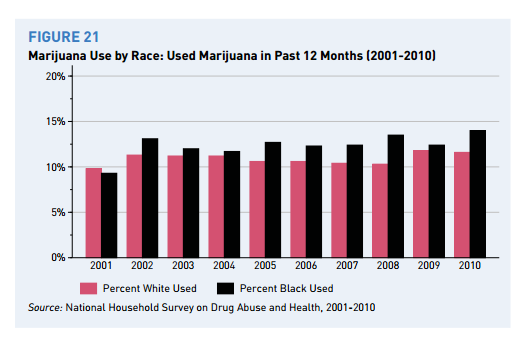
Another ACLU report from last June documented the failures of the war on drugs comparing marijuana use by whites and blacks (basically the same) compared with arrests of whites and blacks (blacks were arrested 4 times as much--see also stop and frisk)


End the war on drugs now.  It's been 40 unsuccessful years.

#HandsUp

#Don'tShoot

#RIPMikeBrown


Sunday, August 24, 2014

The Police Cannot Handle.....

It now appears for the time-being that I have fallen into documenting police shootings and other forms of police misconduct (see here and here)

We are well aware that we have a problem with police shootings, especially of unarmed black men.  But there are other cases that police do not handle well and need attention paid as well.

So, besides unarmed black men, here are some other situations that police have some issues with:
  • peaceful protestors
  • jaywalkers
  • mental illness
  • babies

JAY WALKING
 
Assault/Knocked Unconscious
An 84-year-old Manhattan man is suing the NYPD for $5 million over an alleged jaywalking incident gone terribly awry.  Kang Chun Wong, who was suspected of jaywalking, was allegedly ambushed by a swarm of NYPD officers, knocked unconscious on the street, and handcuffed in a hospital emergency room.
 At least we're not sexually assaulting people like other cops do
Amanda Jo Stephen, 24, was arrested in Austin, Tex. after cops caught her jaywalking while she jogged near the University of Texas.
 Tasered
Florida police said they followed procedure when they Tasered accused jaywalker Zikomo Peurifoy three times when he refused to provide identification after police stopped him for allegedly jaywalking.
The video....may now be shown to officers as an example of how to properly handle an uncooperative suspect.

"Jump-out" Stops (similar to Stop and Frisk) Michigan ACLU (emphasis mine)
So-called "jump-out" stops, which have been widely reported in the media in Saginaw. The stops include officers from various agencies staking out certain communities of color and descending upon individuals who are allegedly violating city ordinances or state laws, including minor infractions such as jaywalking.
The police officers use these minor infractions as an excuse to search the individual, ask for identification and question the individual about other crimes in the area. The ACLU of Michigan asks the DOJ to investigate whether the Saginaw stops are similar to the unconstitutional New York-style stop-and-frisk program and how neighborhoods become "target areas" and whether race-based presumptions may drive those decisions.

ACLU Amicus Brief (HEIEN v. NORTH CAROLINA)
Whether a police officer’s mistake of law can provide the individualized suspicion that the Fourth Amendment requires to justify a traffic stop.
Page 17 (PDF pg. 25)
Citizens who wish to engage in activities that are highly regulated or otherwise likely to attract police attention may face state intrusion even if they carefully research when, where, and how they are permitted to conduct their desired activity. Even more casual activities, though legal, may form the basis for stops, searches, and seizures:
A man is lawfully walking down a street that has no sidewalk. An officer mistakenly believes
that walking in the street violates an ordinance prohibiting jaywalking. The man is stopped and searched.
 ACLU Report, The War on Marijuana in Black and White

Case Study: DeMarcus Sanders, Waterloo, Iowa

emphasis mine
Mr. Sanders feels like being an African American in Waterloo makes him a target
for the police. Mr. Sanders was arrested for marijuana possession again last July. Two
plainclothes police officers stopped him one night for crossing the street in downtown
Waterloo against the light. They said his jaywalking had nearly caused an accident. Mr. Sanders said he was in the crosswalk, and there were no cars or other pedestrians at that hour.

BABIES

SWAT shoot mother and 14 month old black boy

emphasis mine
A SWAT team arrived at Ms. Wilson’s rented house in the Southside neighborhood early in the evening of Jan. 4 to arrest her companion, Anthony Terry, on suspicion of drug dealing, said Greg Garlock, Lima’s police chief. Officers bashed in the front door and entered with guns drawn, said neighbors who saw the raid.
Moments later, the police opened fire, killing Ms. Wilson, 26, and wounding her 14-month-old son, Sincere, Chief Garlock said. One officer involved in the raid, Sgt. Joseph Chavalia, a 31-year veteran, has been placed on paid administrative leave.
 Woman in Missouri sues police after miscarriage
A woman who lost her premature baby a day after she was thrown in jail is suing the police department and two arresting officers who repeatedly ignored her pleas for medical help.
 The officers stopped Salva after they saw her placing a fake temporary tag on the back window of her car. 
 The tape shows Salva telling the officers she is having a miscarriage and is bleeding. On the tape, an officer identified as Schnell, who has worked for the department for less than two years, walks away from the car and tells his partner: “She just gave me a line of excuses. She said she’s bleeding. She said you can check her.”
SWAT team throws flash-bang grenade into baby's crib ACLU Report (See also 124 violent SWAT raids a day)
 One of the officers threw a flashbang grenade into the room. It landed in Baby Bou Bou’s crib.
The 19-month-old had been taken to an intensive burn unit and placed into a medically induced coma. When the flashbang grenade exploded, it blew a hole in 19-month-old Bou Bou’s face and chest. The chest wound was so deep it exposed his ribs. The blast covered Bou Bou’s body in third degree burns.
 The SWAT team was executing a “no knock” warrant to search for someone who did not live in the home that was raided: Bounkahm’s nephew, who was suspected of making a $50 drug sale. 
SWAT Team Throws Flashbang into Home of Pregnant Woman (from same ACLU report)
Knowing there would likely be a pregnant woman inside, a SWAT team still opted to break down the door of a home and throw a flashbang grenade inside in order to execute a search warrant in a drug case. Once inside the home, SWAT officers found one man, one pregnant woman, and a four-year-old child.
The ACLU report on the Militarization of the police has many other situations.  Read the report when you have a chance.

Flash-bang burns 12 year old girl with 1st and 2nd degree burns
Police in Montana were preparing to raid a home at (address) looking for drugs. Before entering an officer deployed a stun grenade, which is meant to disorient by emitting a bright flash. To achieve this, the police dropped the grenade through a window, which landed inches next to a sleeping child.
The officer, unaware that the grenades have a time delayed detonation, and thinking his was a dud, went to deploy a second. It was in this moment that the first grenade ignited, making contact with the sleeping pre-teen girl's flesh..."She has first- and second-degree burns down the left side of her body and on her arms."
continued
While [Police Chief] St. John's statement is touching, his rhetoric is lacking. The police department has yet to offer to pay for the young victim's medical bills.
MENTALLY ILL

A recent report from Kevin Gosztola on the story of Joseph Jennings,  killed by police in Kansas

In Kansas, Ottawa police shot and killed Joseph Jennings, an 18-year-old who was mentally ill, on August 23. At least two officers on the scene were well aware that he suffered from seizures and had responded to a call one day ago to take him to the hospital.
"He just got out of the hospital. He’s suicidal. Don’t shoot. Please don’t shoot." Both Smith and her husband attempted to help the officers so this did not end so tragically.  “I went over there trying to assist them. I had guns in my face.”
Police decided to use a taser, but Smith asked the officers not to use the weapon because Jennings suffered from seizures and had heart problems. So, police decided to fire beanbag rounds at him instead.
Never did he reach for a weapon. They beanbagged him two more times. He lost his balance. They beanbagged him again. He was getting ready to go down. His arm came up a little, and they opened fire on him—24 rounds.”
Ottawa police have claimed 8 officers were involved. Smith maintained that it was at least 14 police officers, who participated in the shooting incident.
Smith is upset with what police officers on the scene did, but she wanted it to be clear she has no “vendetta” against police.
“We are not angry toward the police department,” Smith explained. “We understand they had policies and procedures in place to protect and serve the community. However, those same two officers that were here that night when they assisted in taking him to the hospital and had his stomach pumped knew him, knew his mental state. That’s what gets me and rips my heart out the most.”


New York Times Article Headline: Police Confront Rising Number of Mentally Ill

The article headline is noticeably different in the article than the link to the article.
Police Shootings of Mentally Ill Suspects are on the Upswing


Schizophrenic boy killed by police--previous calls to police had helped child--death leads to new training of police

She asked her husband to call 911. Two officers arrived, she said, and started calmly speaking with the 18-year-old. Then, she said a third officer from another police force showed up and escalated the situation, which quickly spiraled out of control. Less than a minute later, Keith had been tased and was struggling with the first two officers to arrive.
“Then, I heard the gun go off and saw my son start bleeding,” she said.
Fired but not arrested
The Dallas police officer who shot a mentally ill man in a disputed incident caught on tape was fired Thursday.

Police Chief David Brown also announced Officer Cardan Spencer would be charged with first degree aggravated assault. But a judge reportedly refused to sign the arrest warrant and now the case will be referred to a grand jury.
Mentally ill black woman killed after threatening police, but new investigation demanded since Ferguson
Officers were serving an emergency court order to take the 50-year-old woman to a mental health care facility, police said.
 The investigation comes amid protests in Ferguson, Missouri, over the Aug. 9 killing of unarmed black teenager Michael Brown by a white police officer.
 Phoenix police said Cusseaux, who is black, confronted them when she opened her front door just as officers had got through a security door. She then raised the hammer and went at the officers, police said.
 Mentally ill man shot in the back
After shooting their mentally ill son in the back, the Tampa Police Department assured the dead man's parents that officers would get specialized crisis intervention team training.

An 8 On Your Side investigation learned that five years later, TPD walked away from that promise.
"He needed to go to the hospital where he could be understood, where he could be appropriately treated," Stan Skipper said of his son, David.

"They shot five times, three of them hitting David. He had turned to go back into his apartment and they hit him in the back," David's mother, Carol Skipper remembers.
The Skippers called Tampa Police the night of November 9, 1998 to help them take their paranoid schizophrenic son, David to the hospital. They had successfully Baker Acted  David on 19 other occasions.
Maine Press Herald series, Police deadly force and the mentally ill
Five separate fatal shootings of mentally ill people by Maine police in 2011 prompted the Portland Press Herald/Maine Sunday Telegram to examine law enforcement's use of deadly force. Since 1990, police have fired on 101 people, many of them mentally ill, and in every case the state attorney general ruled that the shooting was justified.
LAPD chief faces tense crowd over shooting of mentally ill man
Conflicting accounts about Ford's death have emerged. An LAPD statement, citing a preliminary investigation, said Ford tackled one of two gang officers who approached him on West 65th Street and reached for the officer's gun, prompting both officers to open fire. But a friend of Ford's family told The Times that she witnessed part of the incident and saw no struggle between the officers and Ford.
The killing occurred days after another police shooting in Ferguson, Mo., that left an 18-year-old, unarmed black man dead and sparked violent protests that have intensified national scrutiny of police conduct. By contrast, the Los Angeles protests following Ford's death have been peaceful.

Peaceful Protestors

Ferguson, Missouri


 New Report documents worldwide crackdown on dissent and protest October 2013 (emphasis mine)
In a major new report, the International Network of Civil Liberties Organizations details a global crackdown on peaceful protests through excessive police force and the criminalization of dissent. The report, "Take Back the Streets: Repression and Criminalization of Protest Around the World," warns of a growing tendency to perceive individuals exercising a fundamental democratic right — the right to protest — as a threat requiring a forceful government response. The case studies detailed in this report show how governments have reacted to peaceful protests in the United States, Israel, Canada, Argentina, Egypt, Hungary, Kenya, South Africa and Britain.
The report’s name comes from a police report filed in June 2010 when hundreds of thousands of Canadians took to the streets of Toronto to nonviolently protest the G-20 summit. A senior Toronto police commander responded to the protests by issuing an order to "take back the streets." Within a span of 36 hours, more than 1,000 people — peaceful protesters, journalists, human rights monitors and downtown residents — were arrested and placed in detention.

Anti-Fracking protest in Canada turns violent after police advanced on peaceful protestors
What started as a peaceful protest by the Mi’kmaq First Nation in Elsipogtog, New Brunswick against a shale gas project has now spun violently out of control. After the Royal Canadian Mounted Police (RCMP) advanced on the anti-fracking protest, demonstrators clashed with police, chemical agents were deployed and at least half a dozen police vehicles were destroyed by Molotov cocktails.
Turkey, Taksim Square, Gezi Park
Turkish youth began peacefully protesting the redevelopment plans this morning with singing and book readings in the public space, but as more people congregated, the protest (while still peaceful) began to take on more of an anti-Erdogan theme. And that’s when the police arrived, turning a peaceful protest into what is already being termed Bloody Friday.
Police retaliation against the peaceful protestors was violent, brutal, unnecessary, and inhumane. They were clearly aiming not to diffuse the large crowds, but to hurt as many protestors as possible. Police attacked the large crowds with tear gas grenades, water cannons, and rubber bullets, aiming directly for individuals. Many have been reported to have lost sight, been grievously injured, had brain damage, and even died as a result of these supposed “crowd control” techniques.

Eyewitness account of police riot against peaceful Muslim protest in Australia


The three phases of Egypt’s popular protests

creeping violence:

The new wave of protests has reignited the old debate about violent and nonviolent protests. Many protest movements started peacefully and then slowly turned to violent confrontations. Failure to achieve the aspired outcomes can tempt some protesters to push the boundaries of peacefulness under the slogan of “resisting the police” and “reject submission.”

In Ukraine, after weeks of responding peacefully to police brutality, a group of protesters decided to take the fight to the police, including members of the far-right party Svoboda. In Venezuela, a group of academics and politicians have written a letter deploring what they describe as “a wave of violence from minority and extremist sections of Venezuela’s opposition,” citing physical assaults on government institutions, including gunshots and Molotov cocktail attacks on the state TV channel and a state governor's residence. Egypt also had its share of violent confrontations. The rise of mysterious groups like the Molotov movement, which regularly claim responsibility for violent attacks on the police, signals a new turn toward violence by the “anti-coup movements,” particularly after the ruthless, forced end of the Islamists’ sit-ins in Cairo in August 2013.

Anger is a natural human response to brutality; it can lead to irrationality and emotional response. However, it is counterproductive and self-defeating. Police brutality is not just aimed at restoring order but also, after triggering violence, it is used as a pretext for more brutality. Revising the history of protests helps increase understanding of the deeper impact of violent protest on the strength of the state. In her book Why Civil Resistance Works, Erica Chenoweth found that violent resistance movements, even if they succeed, can create a lot of long-term problems.

Losing peacefulness is like banging on the wall after losing the door key. It will either drain one’s energy or break the wall, but both are futile and potentially destructive, and can ruin the state that the protesters initially aim to salvage.


Occupy Wall Street

Most recently the case of Cecily McMillan made headlines Sparrow media

The Nation
Two years ago, a young activist named Cecily McMillan attended a protest at Zuccotti Park marking the six-month anniversary of Occupy Wall Street. When police moved in to clear the demonstrators, a cop roughly grabbed her breast—photos show an ugly bruise—and she ended up being injured so badly that she had a seizure and ended up in the hospital. In a just world, she would be getting restitution from the City.
Interview with Cecily McMillan on Democracy Now!


Scott Olsen Iraq war veteran Scott Olsen interview on Democracy Now!
Scott Olsen, a 24-year-old former U.S. Marine who served two tours in the Iraq War, was critically wounded after being shot in the head by a police projectile at Occupy Oakland.
continued
Just over two months ago, on October 25th, the 24-year-old Iraq war veteran was taking part in a protest in defense of the Occupy Oakland encampment. By the time the night ended, Olsen was hospitalized in critical condition with a fractured skull and brain swelling. He had been shot in the head by a police projectile while the police were firing bean bags and tear gas to clear the Occupy protesters.
At the time of the shooting Olsen, who served two deployments in Iraq, was wearing military fatigues and a Veterans for Peace T-shirt. Moments after he was shot, police fired a bright flash grenade at a group of Occupy protesters who attempted to help treat him. Soon after that, the protesters carried him away as blood streamed down his face.

** side note Scott Olsen talks Chelsea Manning and Wikileaks
AMY GOODMAN: Scott, as we travel around the country to Occupy encampments, there are veterans everywhere in these encampments. One of the Iraq War vets that you have been standing up for, speaking out for, is Bradley Manning. You, too, were interested in computers. Can you talk about whether you knew him, why Bradley Manning is important to you, who is now facing a court-martial, facing life in prison, possibly death, accused for leaking documents and videos when he was in Iraq, uploading them to WikiLeaks, the whistleblower website?
SCOTT OLSEN: Yeah. Bradley Manning, I didn’t know him until he hit the news. And as soon as I heard about him, as soon as I saw the documents that he leaked, or allegedly leaked, I could see myself almost in his shoes, because I—you know, I, when I was in the Marine Corps, I had access to many of the same types of files. And, you know, if I wanted to, I could have gone up and got them, and—but I didn’t see any that, you know, were particularly—pointed to any particular crimes. But he came across a lot. And what he did is—that’s true heroism. I mean, he faced up against a real enemy. And I think that those documents also tie in with what we are seeing today with this global awakening, with all this information, has been another pile on top of the tinder that’s sparked Occupy, that’s sparked the Arab Spring. It’s played into that, as well.


14 Specific Allegations of NYPD Brutality During Occupy Wall Street Atlantic Magazine
An investigation undertaken by law clinics at NYU, Fordham, Harvard, and Stanford has concluded, after eight months of study, that the NYPD abused Occupy Wall Street protesters and violated their rights on numerous occasions during the 2011 protests that radiated out from Zuccotti Park.
Here is the full report and reports of police brutality start on pages 71 and 72
Reports, videos, and allegations of unjustifiably aggressive and excessive police force against bystanders, protesters, legal observers, and journalists have been a constant and persistent feature of the Occupy protests. Witnesses and victims have reported allegations of such incidents frequently since Occupy started.
continued
The most frequent form of force allegedly used by police against protesters, bystanders, and journalists is bodily force, including through:
• Pushing;
• Shoving, tackling, or throwing forcefully backwards, to the ground, or against a wall;
• Dragging along the ground;
• Hair pulling;
• Hitting or punching, including to the head and face; and
• Kicking, including to the head and face.  

Wikipedia Law Enforcement and the Occupy Movement

The Huffington Post has its own collection of articles about police brutality and the Occupy movement.

Bay Citizen Video shows officers dragging a professor and a student to the ground by their hair
A video showing police at the University of California, Berkeley, dragging two protesters, including a professor, to the ground by their hair during an Occupy protest earlier this week has stoked outrage among some faculty and legal experts.
UC Davis pepper spray incident  YouTube


Police use of pepper spray to disperse “occupy” demonstrators at UC Davis has set off a firestorm of protest, the suspension of two officers, and calls for the school’s chancellor to resign.
Video of the incident at the University of California campus, showing demonstrators sitting peacefully on a sidewalk as officers sprayed them with a red mist of pepper spray at very close range, quickly went viral.

Mass surveillance of Occupy Protest Movements

Occupy Wall Street and the broader Occupy movement was not only subjected to physical police brutality, but was under mass surveillance too as we learned later, the FBI monitored the Occupy movement using counter-terrorism agents and tactics.
The Federal Bureau of Investigation used counterterrorism agents to investigate the Occupy Wall Street movement, including its communications and planning, according to newly disclosed agency records.The F.B.I. records show that as early as September 2011, an agent from a counterterrorism task force in New York notified officials of two landmarks in Lower Manhattan —Federal Hall and the Museum of American Finance — “that their building was identified as a point of interest for the Occupy Wall Street.”
continued
An October 2011 memo from the bureau’s Jacksonville, Fla., field office was titled Domain Program Management Domestic Terrorist.
continued
The F.B.I. was concerned that the movement would provide “an outlet for a lone offender exploiting the movement for reasons associated with general government dissatisfaction.”
Since the Sept. 11, 2001, attacks, the F.B.I. has come under criticism for deploying counterterrorism agents to conduct surveillance and gather intelligence on organizations active in environmental, animal-cruelty and poverty issues.