Thursday, February 5, 2015

National Security Hypocrisy at Secretary of Defense Nomination Hearing

There was a small question but important at the end of part 1 of the nomination hearing for Ashton Carter to be the next Secretary of Defense.  I will get to more of Ashton Carter's nomination hearing in another post, but just quickly I wanted to point out something that freshman Senator Dan Sullivan from Alaska mentioned about oil exploration and national security.

From C-SPAN's transcript of the hearing (format edited by me)
Senator Dan Sullivan (R-Alaska) I think there was consensus that we certainly need to work on all instruments of American power to integrate those as part of a national strategy to address significant challenges that the President has not laid out. One of these instruments that we didn't have ten years ago but there was common agreement on is energy and being once again the world's energy superpower in terms of producing oil and gas and renewables. Last week the President took over 20 million acres of some of the most perspective lands in america for oil and gas development off the table. Do you agree that having energy and using that to help our national security is important and would you agree that taking such huge areas of land off the table, billions, potentially billions of barrels of oil, you think that helps or undermines america's national security?
Ashton Carter: I certainly think energy security is an important part of national security, and I'm incredibly encouraged by what the progress that the United States has made in developing new resources, both oil and gas in recent years I think it's showing up in terms of our economy and also it's showing up geopolitically. With respect to the particular issue you raise, Senator, I'm simply not knowledgeable about it and can't give you a knowledgeable answer.
Senator Sullivan: I think those kind of actions undermine our national security significantly.
Ashton Carter: I understand.
Senator Sullivan is talking about Obama's decision to ban drilling in Alaska's Bristol Bay while conveniently ignoring Obama's other announcement to allow drilling almost everywhere else instead
14 potential lease sales in eight planning areas – 10 sales in the Gulf of Mexico, three off the coast of Alaska, and one in a portion of the Mid- and South Atlantic.
Also notice that while some of Bristol Bay is off limits, there are still 3 sales proposed for Alaska
In Alaska, the draft proposal continues to take a careful approach by utilizing the targeted leasing strategy set forth in the current program, which recognizes the substantial environmental, social and ecological concerns in the Arctic. The draft proposal proposes one sale each in the Chukchi Sea, Beaufort Sea, and Cook Inlet areas.
Also today, President Obama – using his authorities under the OCS Lands Act – designated portions of the Beaufort and Chukchi Seas as off limits from consideration for future oil and gas leasing in order to protect areas of critical importance to subsistence use by Alaska Natives, as well as for their unique and sensitive environmental resources. In December, President Obama used this same authority to place the waters of Bristol Bay off limits to oil and gas development, protecting an area known for its world-class fisheries and stunning beauty.
The New York Times reported on the proposal here and here writing on January 26 that
BP is already facing a record $13.7 billion in potential fines under the Clean Water Act for its role in the Deepwater Horizon spill.
Despite the risks posed by offshore drilling, lawmakers in Virginia and other Southeastern states have pushed to open up their waters to oil companies, lured by the prospect of new revenues. Both of Virginia’s Democratic senators, Mark Warner and Tim Kaine, support drilling off their state’s coast.
and on the 27th wrote that Obama
has tried to push a sweeping, aggressive and controversial plan to fight climate change while offering an appeasement to his opponents in the oil industry and the Republican Party.
State laws limit where drilling can occur, as the story on the 27th writes
Interior Department officials said the drilling in the Atlantic would take place a minimum of 50 miles offshore so that it would not get in the way of the Navy’s military exercises, offshore wind turbines, and commercial and recreational fishing.
Ms. Jewell said that since so little was known about the proposed Atlantic lease sale areas, the coming years would be devoted to exploration of the area to determine the extent of its oil and gas resources and ecological sensitivity. She said that the government was unlikely to sell a drilling lease before 2021, meaning it could be a decade before new drilling begins.
Here from BOEM is the definition of the limits of maritime drilling operations
The Federal Government administers the submerged lands, subsoil, and seabed, lying between the seaward extent of the States' jurisdiction and the seaward extent of Federal jurisdiction.
State jurisdiction is defined as follows:
  • Texas and the Gulf coast of Florida are extended 3 marine leagues (9 nautical miles) seaward from the baseline from which the breadth of the territorial sea is measured.
  • Louisiana is extended 3 imperial nautical miles (imperial nautical mile = 6080.2 feet) seaward of the baseline from which the breadth of the territorial sea is measured.
  • All other States' seaward limits are extended 3 nautical miles (approximately 3.3 statute miles) seaward of the baseline from which the breadth of the territorial sea is measured.
Federal jurisdiction is defined under accepted principles of international law. The seaward limit is defined as the farthest of 200 nautical miles seaward of the baseline from which the breadth of the territorial sea is measured or, if the continental shelf can be shown to exceed 200 nautical miles, a distance not greater than a line 100 nautical miles from the 2,500-meter isobath or a line 350 nautical miles from the baseline.
Outer Continental Shelf limits greater than 200 nautical miles but less than either the 2,500 meter isobath plus 100 nautical miles or 350 nautical miles are defined by a line 60 nautical miles seaward of the foot of the continental slope or by a line seaward of the foot of the continental slope connecting points where the sediment thickness divided by the distance to the foot of the slope equals 0.01, whichever is farthest.
Here are the types of drilling rigs from the same BOEM page


Here from the New York Times January 27th article (citing BOEM again) is a map of the proposed drilling sites and restricted areas


Democrats and environmental groups are crying foul (except for Virginia's Democratic Senators and a few others that for instance voted for the Keystone XL Pipeline)


Nicole Dallara, Outreach Director of the New Jersey Sierra Club wrote
We support President Obama and the steps he has taken to combat climate change. However, by opening up various areas to drilling, he is undoing the work he has done to fight climate change. During his State of the Union address, President Obama called climate change the greatest threat to future generations. However, opening up areas to drill accelerates climate change, while undermining any advancement in renewable energy.
Democratic Senators Markey (Massachusetts) Menendez and Booker (New Jersey) and Cardin (Maryland) criticized the proposal as bad for the environment and citizens of their states while only benefiting oil companies.
“All of the risk is put on the backs of our shore communities, and all of the reward goes to Big Oil,” said Sen. Robert Menendez (D-N.J.). “Oil companies don’t need another handout. They don’t need another gift from the federal government. They’re doing just fine with the billions of dollars of tax breaks that Congress won’t repeal.”
Mother Jones adds some more to the story
Cardin said that the reserves off the Atlantic Coast "are minimal compared to the risk." The Department of Interior's Bureau of Ocean Energy Management (BOEM) estimated last year that there are 4.72 billion barrels of recoverable oil and 37.51 trillion cubic feet of natural gas in the Outer Continental Shelf off the entire east coast. The Gulf of Mexico, in contrast, contains an estimated 48.4 billion barrels.
The senators cited a recent report from the environmental group Oceana, which found that offshore wind development has the potential to create twice as many jobs and energy as oil and gas development on the Atlantic coast.
Here is why all of this matters at the confirmation hearing for the new Secretary of Defense.
Climate change will affect the Department of Defense's ability to defend the Nation and poses immediate risks to U.S. national security. The Department is responding to climate change in two ways: adaptation, or efforts to plan for the changes that are occurring or expected to occur; and mitigation, or efforts that reduce greenhouse gas emissions.
That is the description for this report from June which describes policy planning relating to military operations, readiness training, natural and built infrastructure and department acquisitions and the supply chain.
Rising global temperatures, changing precipitation patterns, climbing sea levels, and more extreme weather events will intensify the challenges of global instability, hunger, poverty, and conflict. They will likely lead to food and water shortages, pandemic disease, disputes over refugees and resources, and destruction by natural disasters in regions across the globe. In our defense strategy, we refer to climate change as a “threat multiplier” because it has the potential to exacerbate many of the challenges we are dealing with today – from infectious disease to terrorism. We are already beginning to see some of these impacts.  
The impact of global warming is already being felt
The third National Climate Assessment notes that certain types of weather events have become more frequent and/or intense, including heat waves, heavy downpours, and, in some regions, floods and droughts. Sea levels are rising, oceans are becoming more acidic, and glaciers and arctic sea ice are melting. Scientists predict that these changes will continue and even increase in frequency or duration over the next 100 years.
These climate-­‐related effects are already being observed at installations throughout the U.S. and overseas and affect many of the Department’s activities and decisions related to future operating environments, military readiness, stationing, environmental compliance and stewardship, and infrastructure planning and maintenance.
Climate change also will interact with other stressors in ways that may affect the deployment of U.S. Forces overseas and here at home. As climate change affects the availability of food and water, human migration, and competition for natural resources, the Department’s unique capability to provide logistical, material, and security assistance on a massive scale or in rapid fashion may be called upon with increasing frequency.
Global warming could lead to new threats in new locations as well as increased terrorism and unstable governments and affect how the military can respond
sea level rise may impact the execution of amphibious landings; changing temperatures and lengthened seasons could impact operation timing windows; and increased frequency of extreme weather could impact overflight possibility as well as intelligence, surveillance and reconnaissance capability. The opening of formerly-­‐frozen Arctic sea lanes will increase the need for the Department to monitor events, safeguard freedom of navigation, and ensure stability in this resource-­‐ rich area. Maintaining stability within and among other nations is an important means of avoiding full-­‐ scale military conflicts. The impacts of climate change may cause instability in other countries by impairing access to food and water, damaging infrastructure, spreading disease, uprooting and displacing large numbers of people, compelling mass migration, interrupting commercial activity, or restricting electricity availability. These developments could undermine already-­‐fragile governments that are unable to respond effectively or challenge currently-­‐stable governments, as well as increasing competition and tension between countries vying for limited resources. These gaps in governance can create an avenue for extremist ideologies and conditions that foster terrorism.
Besides global warming affecting military defense preparedness, there are also the increased threats to our health as laid out by the CDC
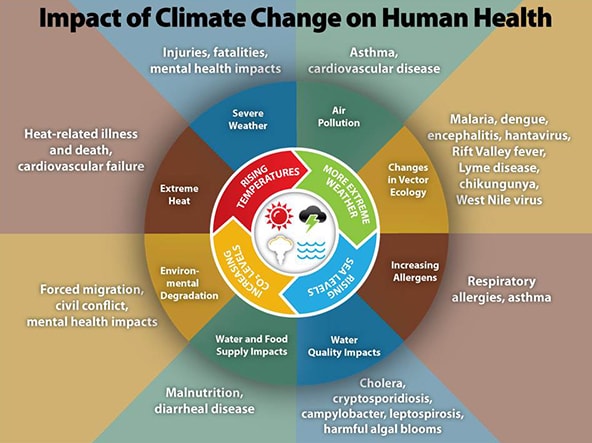


Then there is also the fact that the body cannot withstand explosions, which happen a lot as well.  By January 27th there had already been 5 pipeline explosions, and a 2013 Chevron pipeline explosion needed a 1.5 mile evacuation zone.

Along with the 2010 BP spill which is widely cited as a concern in the Gulf, it is hardly the only incident even in recent months.

November 21 2014
(Reuters) - An explosion at oil and gas operator Fieldwood Energy's Echo Platform in the Gulf of Mexico on Thursday killed one person and injured at least one, but no pollution was reported, a U.S. safety agency and the company said.

December 19 2014
An explosion and fire early Friday morning killed two people and critically injured two others at an oil rig in southeastern Oklahoma.
Authorities said the explosion occurred at the rig about two miles west of Coalgate in a remote area of rural Coal County, about 100 miles southeast of Oklahoma City.

And here is some safety news from Canada


And currently we only have to worry about the safety of 2.5 million miles of pipeline


I can understand Senator Sullivan and Ashton Carter's concerns about energy security and I agree that we should be worried about the future of US energy security and homeland security, but Senator Sullivan and many Republicans, as well as some Democrats and President Obama see continued and increased oil and gas drilling as the solution to both problems, even as accidents kill workers and normal production ruins our health and we must reduce by at least 40% below the 1990 level our greenhouse gas emissions by 2030 in order to limit the already begun effects of the changing climate--remember that some of these leases won't start until 2021 (emphasis mine)
Ms. Jewell said that since so little was known about the proposed Atlantic lease sale areas, the coming years would be devoted to exploration of the area to determine the extent of its oil and gas resources and ecological sensitivity. She said that the government was unlikely to sell a drilling lease before 2021, meaning it could be a decade before new drilling begins.


**IF you are willing to share your name publicly then comment on the proposition HERE by March 16th

There are also 4 public meetings scheduled


 • New Orleans, Louisiana: Monday, February 23, 2015, Bureau of Ocean Energy Management, Gulf of Mexico OCS Region,

1201 Elmwood Park Boulevard, New Orleans, Louisiana 70123, one meeting beginning at 1:00
p.m. CST;

• Panama City, Florida: Tuesday, February 24, 2015, Wyndham Bay Point Resort,
4114 Jan Cooley Drive, Panama City Beach, Florida, 32408, one meeting beginning at 4:00 p.m. CST;

• Mobile, Alabama: Wednesday, February 25, 2015, Hilton Garden Inn Mobile West,
828 West I–65 Service Road South, Mobile, Alabama 36609, one meeting beginning at 4:00 p.m. CST;

• Gulfport, Mississippi: Thursday, February 26, 2015, Courtyard by Marriott, Gulfport Beachfront MS Hotel,
1600 East Beach Boulevard, Gulfport, Mississippi 39501, one meeting beginning at 4:00 p.m. CST. 

Wednesday, February 4, 2015

"Constant Rebalancing" and US boots on the ground in Iraq

We all knew it would happen soon.  I just wonder when we'll invade Afghanistan again.

Here is the article from ZeroHedge


The Latest US Invasion Of Iraq Begins: US Military Search And Rescue Teams Arrive In Northern Iraq

Tyler Durden's picture


Despite numerous explanations that no boots-on-the-ground will be on-the-ground in Iraq in the war against Islamic State, it appears, as CNN reports, that the US military has moved Search-and-Rescue (S&R) assets to Northern Iraq as part of a "constant rebalancing" depending on the evolving airstrike-only mission.
Of course, as the 'unnamed source' was so quick to explain, this was in no way a response to threats from The UAE to pull out of the coalition unless S&R assets were placed in Iraq since, cynically speaking, the UAE demands are only the result of US demands that it demand it anyway.
However, as Bloomberg notes - on the heels of selling 170 M-1 Abrams tanks to Iraq indirectly 'stimulating' the US economy ("middle-class economics" don't forget) - US allies are now withholding military power in an effort to get Obama to do more in Syria (which once again cynically-speaking -gives the President further excuse to provide billions in fresh military contracts to General Dynamics & Northrop Grummond) all in the name of peace, prosperity and the American way of life.
U.S. allies in the fight against Islamic State extremists are withholding military capabilities as leverage on President Barack Obama to do more in Syria, according to Bloomberg.

At issue are calls from the U.A.E. for U.S. pilot-rescue teams to be positioned closer to the Syrian battleground, where they’d be primed for quicker action, and from Turkey to impose a protected safe zone in Syria. Their demands create problems for Obama, who officials have said is wary of drawing the U.S. more deeply into Syria’s turmoil.
Underlying that issue is disagreement over Obama’s decision to make fighting Islamic State the priority over efforts to remove the regime of President Bashar al-Assad.
In congressional testimony on Tuesday, Marine Lieutenant General Vincent Stewart, director of the U.S. Defense Intelligence Agency, confirmed a trend that troubles regional allies Turkey and Arab states such as Saudi Arabia. As Bloomberg reports, he told the House Armed Services Committee, "we assess the conflict is trending in the Assad regime’s favor."
The state department completes the puppetry:
Jordan, “the country that was most impacted” by the killing, “intends to intensify its efforts,” Psaki said.
And this needs our assistance with more military might (spending) and support... and boots on the ground in Iraq... it's only fair.
*  * *
*  *  *
And so, as CNN reports, the U.S. military has moved some search and rescue assets into Northern Iraq, a U.S. official said on Wednesday.
The move was described as part of a constant rebalancing of search and rescue assets that are moved depending on the evolving airstrike mission. The source did not suggest it was a response to United Arab Emirates concerns about proximity of rescue assets and did not say when this latest rotation happened.

The reshuffling comes after news that UAE had suspended participation in coalition strikes out of concern that search and rescue assets were not placed close enough to ensure a timely effort to rescue, a claim disputed by U.S. military officials.
* * *
Of course, if we were the cynical historians of the desperation of the military-industrial complex, we could see this whole facade as nothing but smoke and mirrors for economic stimulatory excuses and deficit expansion in the name of saving the world and... the UAE demands are only the result of US demands that it demand it anyway.

Friday, January 30, 2015

The Franken Amendment to Keystone XL Pipeline

I've been watching some of the debates around the Keystone XL pipeline and I wanted to say some things about the Franken Amendment, which requires that if built, steel for the pipeline be made in America, which sounds good for jobs, but with the environmental consequences is just making sure American companies profit from making more money on global warming.  But Republicans killed the amendment (I think) because of a caveat placed in the bill about cost

MinnPost
The American-made steel debate will be familiar to those who paid attention to Franken's re-election campaign last year. Franken has said he opposes bypassing the regulatory process for Keystone, but, either way, it should be constructed with American steel. During the campaign his Republican opponent, businessman Mike McFadden, said he didn't think that should be a precondition to constructing Keystone, a comment the DFL used against him throughout the campaign, especially on Minnesota's Iron Range.
Franken's amendment is short, requiring that: “to the maximum extent consistent with the obligations of the United States under international trade agreements, none of the iron, steel or manufactured goods used in construction of the Keystone XL Pipeline and facilities approved by this act may be produced outside of the United States.” The big caveat: the amendment wouldn’t apply if using American-made products would increase the price of the project by more than 25 percent.

Here is the full text of the Franken Amendment

(Purpose: To requie the use of iron, steel, and manufactured goods 
 produced in the United States in the construction of the Keystone XL 
                        Pipeline and facilities)

       After section 2, insert the following:

     SEC. __. USE OF UNITED STATES IRON, STEEL, AND MANUFACTURED 
                   GOODS.

       (a) Limitation.--Subject to subsection (b), to the maximum 
     extent consistent with the obligations of the United States 
     under international trade agreements, none of the iron, 
     steel, or manufactured goods used in the construction of the 
     Keystone XL Pipeline and facilities approved by this Act may 
     be produced outside of the United States.
       (b) Nonapplication.--Subsection (a) shall not apply to the 
     extent that the President finds that--
       (1) iron, steel, and the applicable manufactured goods are 
     not produced in the United States in sufficient and 
     reasonably available quantities with a satisfactory quality; 
     or
       (2) inclusion of iron, steel, or any manufactured good 
     produced in the United States will increase the cost of the 
     iron, steel, or any manufactured good used in the Pipeline 
     and facilities by more than 25 percent.

The Hill
Senate Democrats are pressing amendments to legislation that would approve the Keystone XL pipeline, arguing their proposals would "actually make it an American jobs bill."
Because Keystone is a private company, CBO does not look at costs, writing in it's report 
Based on information from affected agencies, CBO estimates that enacting this legislation would have no significant effect on federal spending for regulatory activities related to the proposed pipeline. (Any such regulatory activities are subject to the availability of appropriated funds.) Enacting the legislation would not affect direct spending or revenues; therefore, pay-as-you-go procedures do not apply.

The Keystone XL Pipeline Approval Act contains no intergovernmental or private-sector mandates as defined in the Unfunded Mandates Reform Act and would impose no costs on state, local, or tribal governments.
so I am having a hard time finding out how much 100% American steel and iron would cost, if it would actually increase the price of the project by more than 25%.

Senator Franken talked about his amendment on the Senate floor
Congress has had a long history of using ``Buy American'' provisions in order to maximize the economic benefits of infrastructure projects. ``Buy American'' provisions ensure that more goods and manufactured items used in infrastructure and other projects are produced here at home. In fact, as recently as 2013 Congress passed a provision in the WRDA Act--the Water Resources Development Act--to require the use of iron, steel, and other domestically produced goods in water infrastructure projects. That is important because it means that we keep jobs and profits here at home instead of sending them abroad.

Unfortunately, there is no such requirement when it comes to construction of the Keystone XL Pipeline. In fact, according to TransCanada itself, half of the pipe for the U.S. portion of the pipeline would be sourced from foreign countries. And for the other half that would be put together here in the United States, much of the raw material, such as the steel that goes into the pipe, could be sourced from overseas. This is the problem our amendment addresses. Our amendment would require the use of domestic iron, steel, and other manufactured goods in the construction of the Keystone XL Pipeline, provided the material is readily available and affordable.

If adopted, the amendment would create jobs for iron ore miners, such as the ones across the Iron Range in my State of Minnesota. It would create more jobs for shippers who ship the ore across the Great Lakes or by rail or down the Mississippi River. It would create more jobs for our steelworkers who work in steel mills across this country.

At the same time, we specify in our amendment that these requirements would be implemented consistent with our trade agreements.

Some of my colleagues on the other side of the aisle have said we shouldn't put such restrictions on a private company. But we have to remember that this isn't your typical private company. The underlying bill to authorize the pipeline would throw out the established approval process for the construction of a cross-border pipeline by a foreign corporation. That means all of the important assessments regarding things such as safety and the environment that our Federal agencies might have made on this project are tossed by the wayside. So if Congress is going to intervene on behalf of this foreign company, then the least we can do is to make sure the company building the pipeline uses American-made iron and steel. This is a very pragmatic amendment . We all have different views on the approval process for this pipeline, and while I believe Congress should not circumvent the approval process we have in place, I think we can all agree that we want jobs here in America.
Alaska Senator Murkowski who supports Keystone, added that TransCanada already committed to using 75% American steel
This pipeline is a private project. This is not a federally funded infrastructure project. This would be the first time that Congress has directed or forced private parties to purchase domestic goods and materials.

We actually asked the Congressional Research Service to look into this to see if there was any other instance at the Federal level where private parties were told that they must purchase 100-percent domestic goods and materials, and so far the answer to that inquiry has been that they can find no instance of that.

I think we need to be careful about this as a precedent because if we are going to direct this particular project--the Keystone XL--to have this requirement on it, where do we go next? What will happen to the next project that we have? Will it be the next pipeline or the next renewable energy project? Where does this slippery slope go?

I think it is fair to note that TransCanada has made a commitment to have 75 percent of the pipes for this project come from North America, and fully half of that--more than 332,000 tons of steel will come from the State of Arkansas.

I am with the Senator from Minnesota. We want to make sure we get as many jobs as we absolutely can and make sure they are good-paying jobs--whether it is in steel making or widget making or welders. This is about jobs. This is what we want to do to encourage jobs. I think we need to be very cognizant of what this particular amendment would do. This amendment --for the first time ever--would direct a private entity to utilize all American-made products throughout the process of the construction. It is important to note that the American Iron and Steel Institute has been a strong supporter of the Keystone XL Pipeline. We have all received a letter--they called it a Steelgram--from the American Iron and Steel Institute. They let us know very clearly and in no uncertain terms that they support Keystone XL. They said it is essential that Congress act to ensure the approval of the Keystone XL Pipeline
Senator Durbin spoke about Republican hypocrisy concerning Keystone amendments (there are 247 by the way)
When the Democrats insisted that this pipeline's product--the oil that is refined and used for consumption--be sold in the United States, the Republicans voted no. The Republicans voted no. I have a lengthy memo on my desk of all of the Republican Senators who have come to the floor insisting that the Keystone Pipeline was going to create more gasoline, more diesel fuel, and help the American economy. Yet, when Senator Markey of Massachusetts offered an amendment to say keep the products coming from the Keystone Pipeline in the United States, the Republicans, to a person, voted no.

Then Senator Franken came forward and said, Well, let's agree that if this is about jobs in America that the Keystone Pipeline will use American steel. That seems reasonable to me, and I voted for it. The Republicans voted no. They defeated the notion that we would use American steel to build this pipeline.

This pipeline is Senate Bill 1 for the Senate Republicans. It is their highest priority. One would think that if it truly is a jobs bill, they would want American steel to be used to build the pipeline; let our steel mills build this pipeline in the future, create the jobs in America, and they voted no.

Yesterday I offered an amendment as well. We know at the end of this pipeline, if tar sands reach the United States through this means or otherwise, it is a pretty nasty process taking the tar and sand out of the oil, and what is left over is a nasty product known as petcoke.

Petcoke is now being stored in three-story-high piles in the city of Chicago. I have seen it. And the city is trying to get to the point where it is at least contained and covered. Yet, the company that owns it, which incidentally is a company owned by the Koch brothers--what an irony--this company has resisted the idea of covering these petcoke piles, so this nasty black substance blows through the community in southeast Chicago. The city of Chicago is in a battle.

I tried to put in an effort yesterday so that we would establish standards for transportation and storage of petcoke, and the Republicans insisted it was a benign substance, it isn't hazardous, not dangerous, don't worry about it. If some of the Senators who voted against my amendment , tomorrow, God forbid, face this issue in their community, I think they will have a little different view of petcoke and what it can do to people, the impact it has on respiratory disease and asthma.

Yesterday I didn't prevail. But I can tell my colleagues how over the years, as I fought the tobacco companies and they insisted there was nothing dangerous about tobacco, I heard those arguments from industry just as we are hearing the petcoke arguments from the petcoke industry. Ultimately, good sense prevailed, public health prevailed, and we moved toward regulation of tobacco products. We should do the same--basic regulation--to protect the public from any negative impact on their health relative to petcoke.


Bandar bin Sultan fired (again)

Rumors are emerging that Prince Bandar bin Sultan has been fired. But as I got excited about the wise move by the new King, Marcy Wheeler asked how long it will last this time.


Now I am seeing more people weighing in as well


Abdulkhaleq Abdulla describes himself as a professor of political science in the UAE.  

Here was the first tweet that I saw.


Middle East Monitor reports on a possible reason why Bandar was removed now by King Salman
Going through a recently leaked series of reports and video clips shed light on these issues. It is now evident that Al-Tuwaijri had been waging a campaign against Salman when he was crown prince. He secretly propagated the idea that it was necessary to have Salman step down. This was part of a well-studied plot hatched in the aftermath of the creation of the post of deputy crown prince.
The leaks appear to show that Al-Tuwaijri and Prince Mutaib Bin Abdullah worked with the assistance and support of Prince Bandar Bin Sultan to promote the exclusion of Salman so Miqrin becomes crown prince and Mutaib his deputy.
Middle East Eye agrees with less explicit language
The move was a significant break with the past that saw several key players stripped of their seats, and various Salman loyalists promoted up the ranks.
The move was a significant break with the past that saw several key players stripped of their seats, and various Salman loyalists promoted up the ranks. - See more at: http://www.middleeasteye.net/news/new-saudi-king-orders-cabinet-reshuffle-280880866#sthash.48S7ueOE.dpuf
But as recently as the 23rd the New York Times reported that Bandar would keep his post
Longtime officials kept their posts, including Prince Bandar bin Sultan, who remains the national security council adviser.
As I looked around, I remembered that Bandar had been removed from overseeing Syrian activities as head of Saudi intelligence in February. In April the Chicago Tribune carried a Reuters report that said
RIYADH (Reuters) - Saudi Arabian intelligence chief Prince Bandar bin Sultan, the architect of Riyadh's attempts to bring down Syrian President Bashar al-Assad, has been removed from his post, state media reported on Tuesday.

His departure, months after he was quoted warning of a "major shift" from the United States over its Middle East policy, may help to smooth relations with Washington as Riyadh pushes for more U.S. support for Syrian rebels.
Prince Bandar, who has recently spent time in the United States and Morocco for medical treatment, was replaced on an interim basis by a deputy.

"Prince Bandar was relieved of his post at his own request and General Youssef al-Idrissi was asked to carry out the duties of the head of general intelligence," state news agency SPA said, citing a royal decree.

The decree did not say if Prince Bandar would continue in his other position as head of the National Security Council.

A former ambassador to the United States, Prince Bandar was appointed intelligence chief in July 2012, in charge of helping Syrian rebels bring down Assad, an ally of Riyadh's biggest regional rival Iran.

He was also closely involved in Saudi support for Egypt's military rulers after they ousted Islamist president Mohamed Mursi last year, diplomatic sources in the Gulf have said.
Daily Beast profile of "Bandar Bush"
The new Saudi monarch, King Salman, and the people he has brought to top positions around him have wasted no time shaking up some of the most critical positions in their government, especially where United States security concerns come into the picture.

The change with the most international resonance is without question the removal of Prince Bandar bin Sultan, known as “Bandar Bush” when he was ambassador to Washington, from his position as head of the Saudi National Security Council. Bandar had given up his position as intelligence chief last year, and his successor in that position also was changed January 29, 2015.
We will see how long Bandar has lost his job this time.


Wednesday, January 28, 2015

Not Charlie Hebdo

What news gains international attention and what doesn't? The Charlie Hebdo attacks on January 7th got a unity march from world leaders with hypocritical records on free speech in their own countries.  These attacks right before Christmas did not.  I will say however that the response was a more nuanced correct response to any violence--deal with the immediate attacks separately and don't react to quickly or with an overreaction.  When the response to an attack is war, then that will only bring more violence.

Yahoo News December 22, 2014
French authorities urged calm after a series of attacks across the country left dozens of people injured, and said there was no evidence the violent acts were connected by any terrorist motive.
In the latest incident, 11 people were injured after a driver crashed his van into a crowded Christmas market in western France Monday evening. The driver then stabbed himself several times and is among five people hospitalized in serious condition, authorities said.
The attack, in the town Nantes, came after a pair of weekend attacks: one in which another driver ran down 13 bystanders in the city Dijon in eastern France, and one in which a recent convert to Islam knifed police officers outside the city of Tours.
Speaking on French television, Interior Ministry spokesman Pierre-Henry Brandet said the driver in Nantes "deliberately crashed into the crowd."
While police investigations continued late Monday, local prosecutor Brigitte Lamy said the incident was an isolated incident and "not a terrorist act."
continued
In a signal of how serious the government was taking the attacks, Prime Minister Manuel Valls issued a statement late Monday calling for calm and vigilance.
continued
The prosecutor in Dijon said the driver behind the attack in that city has a long history of severe mental illness and no links to terrorism.
The man, who is 40, has admitted his role in the attack, said prosecutor Marie-Christine Tarrare. She said the man, the French-born son of North African immigrants, acted alone and had no religious motivations, but was upset at the treatment of Chechen children.
He shouted 'God is great' to give himself courage to act, and not out of religious belief, Tarrare said.
The Independent December 24 2014
In what may have been a “revenge” attack by far-right activists, a car rammed the main gate of a mosque in Strasbourg in the early hours of yesterday. Police fear that the raid might have been carried out by activists convinced – despite official denials – that France was under “Islamist attack”. 
Shots were also fired at a synagogue in Paris and a heavily armed man was arrested on the streets of Cannes yesterday. There was no immediate reason to connect either event with the three incidents in Nantes, Dijon and Tours.
The Socialist-led government called for calm and insisted that the events should be treated separately. Mr Valls said such a “series of dramas” was “disturbing” but there was no cause for “panic”. He announced that an extra 300 soldiers would be deployed to strengthen the armed, military and police patrols which have protected city centres for the last 20 years.
The far-right political leader Marine le Pen had earlier accused the government and media of deliberately “minimising” the first two incidents which she described as Islamist “terrorist attacks”. Ms Le Pen was silent about the third incident on Monday night in which the man, with no known political or religious affiliations, drove his van into Nantes’ crowded Christmas market.

Friday, January 23, 2015

New NGIA Director talks about mapping ISIS

The new Director of NGIA talks about the difficulty in mapping ISIS controlled territories

From GovExec

Geospatial Agency Chief Takes Care Not to Oversell Intelligence on the Islamic State
The speed with which the self-proclaimed Islamic State gobbled up territory in Iraq and Syria has made mapping its reach difficult, “which means we don’t try to oversell our intelligence,” the director of the National Geospatial-Intelligence Agency said on Wednesday.
continued 
Cardillo took reporters’ questions before he spoke at a banquet in Arlington, Va., hosted by the Intelligence and National Security Alliance, a nonprofit that brings together current and retired intelligence officials, academics and private contractors.
Stressing the geospatial agency’s role in numerous current crises, Cardillo—who became its sixth director in October—cited the “democratization” of geospatial information as an impetus for NGA to partner with public and private organizations. “With our new focus on consequence and NGA’s great legacy of public service, I have been encouraging NGA to become even more transparent,” he said in his speech. “With more transparency, NGA is uniquely positioned to play a leading role to advance public confidence in the intelligence community.”
Expressing a desire for greater service to the State Department and the United Nations, Cardillo cited recent intelligence mapping of evidence of human rights violations by the violent Boko Haram movement in Nigeria, as well as aid to the struggling Afghan government in determining whether voter fraud discredited its recent elections.
But he singled out for special praise NGA’s work in West Africa to help alleviate last fall’s Ebola crisis, as an example of partnering with private and nonprofit sector organizations. “We are the first intelligence agency to create a [website] with access to our relevant unclassified content” of important sites in Liberia, Sierra Leone and Guinea. “It is open to everyone—no passwords, no closed groups,” he said.
Since the website’s October 23 launch, NGA has posted one-fourth of all its available content affecting Ebola, 99 percent of which is unclassified, he said. These include elevation data and suitable sites for treatment centers. “We have publicly posted 224 NGA products,” he noted. “Our transparency is striking a major chord with NGOs, international health organizations and other countries as we approach 1 million clicks on our website.” Cardillo expressed special pride in one on-the-ground analyst embedded with the 101stAirborne in Monrovia to help update Liberia’s maps.
continued
The geospatial intel agency, he added, is the “most open and transparent intelligence agency involved in humanitarian relief, safety of navigation, public science and research. So we are natural integrators. Every modern local, regional and global challenge -- climate change, the future energy landscape and many more -- has geography at its heart.” 

I wrote about the NGIA's Ebola resources maps here


A Sample of the Cost of the Continuing War in Iraq (and Syria)

From the Federal Register

(i) Prospective Purchaser: Republic of Iraq

(ii) Total Estimated Value:

Major Defense Equipment: * $399 million
Other: ..................................... $180 million
Total ................................... $579 million

(iii) Description and Quantity of Articles or Services under Consideration for Purchase:
1000 M1151A1 UpArmored High Mobility Multi-Purpose Wheeled Vehicles (HMMWVs),
1000 M2 .50 cal. machine guns, and 
1000 MK–19 40mm grenade launchers with universal mounts, commercial radios, communication equipment, repair and spare parts, publications and technical documentation, tools and test equipment, personnel training and training equipment, U.S. Government and contractor logistics and technical support services, and other related elements of logistics support.

continued

The proposed sale of the M1151 HMMWVs would facilitate progress towards increasing the Iraqi Security Force’s mobility and self-defense capabilities. Iraq will use the HMMWVs to increase the safety, effectiveness, and self-reliance of the Iraqi Security Forces. Iraq will have no difficulty absorbing these additional HMMWVs into its armed forces. The proposed sale of this equipment and support will not alter the basic military balance in the region. The principal contractor will be AM General in South Bend, Indiana. There are no known offset agreements proposed in connections with this potential sale.

From the Federal Register

(i) Prospective Purchaser: Iraq
(ii) Total Estimated Value:
Major Defense Equipment* $.70 billion
Other ................................... $1.70 billion
Total ................................. $2.40 billion

175 Full Track M1A1 Abrams Tanks with 120mm Gun modified and upgraded to the M1A1 Abrams configuration,

15 M88A2 Improved Tank Recovery Vehicles,

175 .50 Cal M2 Machine Guns with Chrysler Mount,

350 7.62mm M240 Machine Guns,

10 .50 Cal BR M2 HB Machine Guns,

10,000 M831A1 120mm High Explosive Anti-tank TP–T Ammunition,

25,000 M865 120mm TPCSDS–T Ammunition,

10,000 M830A1 120mm High Explosive Anti-tank Multipurpose Tracer Ammunition,

10,000 M1002 120mm Target Practice Multipurpose Tracer (TPMP–T) Ammunition,

and 190 AN/VRC–92 Vehicular Dual Long-Range Radio Systems,

700 M1028 Commercial Utility Cargo Vehicles, Radios, Receiver Transmitters (RT–1702G), installation, ammunition, simulators, communication equipment, support equipment, fuel, transportation, spare and repair parts, site surveys, Quality Assurance Teams, special tools and test equipment, personnel training and training equipment, publications and technical documentation, U.S. Government and contractor technical, engineering, and logistical support services, and other related elements of program and logistics support. 

continued

Implementation of this proposed sale will require approximately five U.S. Government and one hundred contractor representatives to travel to Iraq for a period of up to five years for delivery, system checkout, program support, and training.

And yesterday the New York Times reports that because of falling oil prices Iraq wants weapons to fight ISIS on credit
Battered by a sharp decline in oil prices, Iraq is asking Western allies to provide weapons on credit for its fight against the Islamic State until Baghdad is in a better position to pay.
Prime Minister Haider al-Abadi of Iraq said on Thursday that oil exports accounted for 85 percent of his government’s budget and that the precipitous drop in prices was posing a fresh challenge to the Iraqi government as it was trying to push back Islamic State militants.
“This has been disastrous for us,” Mr. Abadi said. “One thing we are asking for is deferred payment. That’s one solution. And I think our coalition partner has been very receptive of this.”
Mr. Abadi spoke at a news conference here with Secretary of State John Kerry and Philip Hammond, the British foreign secretary, after a meeting of 21 countries that are trying to weaken, and ultimately defeat, militants from the Islamic State who have proclaimed a caliphate that stretches from eastern Syria to northern and western Iraq.