From PoliceOneTASER International to split brands, announces Axon division
New division aimed at expanding the company's technology platform
June 18, 2015 at 8:55 PM
By PoliceOne Staff
TASER International has unveiled a new division aimed at expanding the company’s technology platform.
Headquartered in Seattle, Axon will serve as an umbrella brand for the company’s body-worn cameras, digital evidence management software, mobile applications, analytics tools, and other forthcoming projects. The company’s weapons division, which includes the X2 and X26P less lethal devices, will continue to use the TASER brand.
In a video announcement released this morning, TASER CEO Rick Smith detailed the company’s rationale for separating the brands, comparing TASER’s situation to that of Microsoft when it decided to split its Xbox gaming division in order to differentiate from its parent company’s association with office technology.
“Axon was the name that we used for selling cameras historically, but we realized that brand had the room to grow and encompass all of our connected technologies,” Smith said.
Smith noted that Axon will function collaboratively with TASER in that its smart weapons use or interact with the same technologies found in the Axon suite. The company’s goal is for the two brands to reinforce each other and together form “a powerful set of products and services for law enforcement.”
1) "2015 will be our Superbowl" says TASER where I discuss body cameras, Tasers and the money being made off of police brutality and a policy solution to the problem. See more here.
2) House passed Commerce, Justice, Science appropriations bill including some important amendments for police reform, including Joaquin Castro providing $10 million dollars for body cameras
The debate over the federal minimum wage in the nascent presidential campaign is really two debates: one among Democrats and one among Republicans.
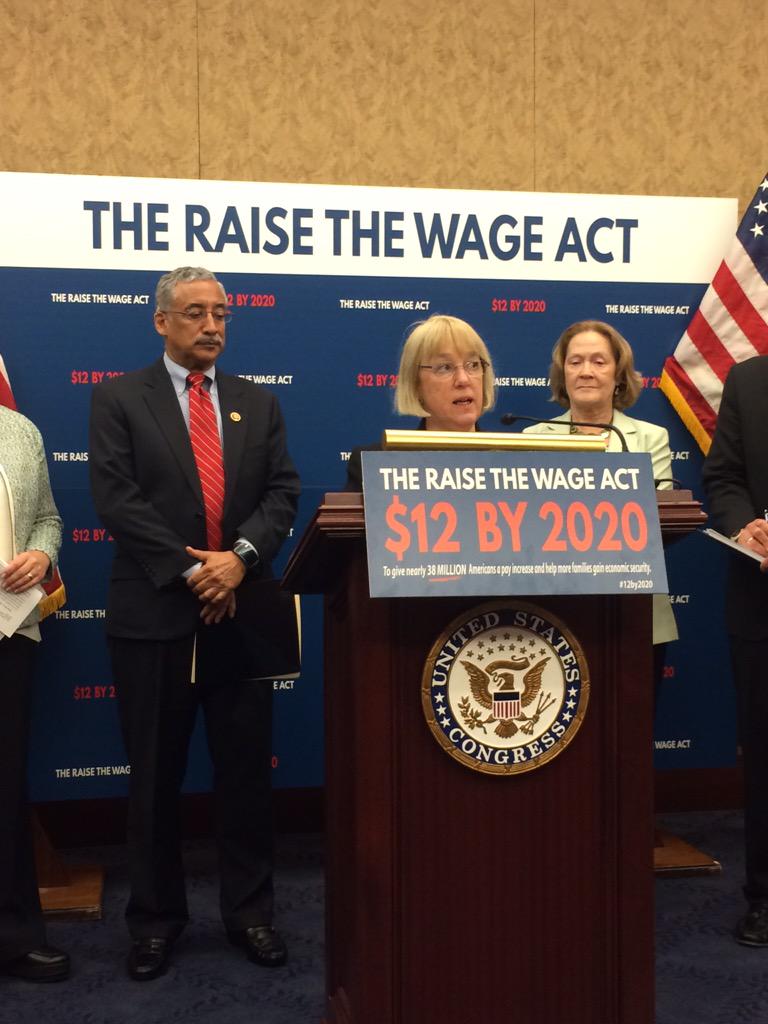
Democrats are divided on how much to raise the minimum, currently $7.25 an hour. Hillary Rodham Clinton has spoken favorably of a Democratic bill for a raise to $12 by 2020. Senator Bernie Sanders and Martin O’Malley, the former governor of Maryland, as well as several congressional Democrats, support $15 an hour by 2020. Is $12 adequate to ensure a minimally decent living? Would $15 be economically feasible?
Going to $12 by 2020 would bring the minimum more in line with historical benchmarks, including wage and price inflation. But it is a stretch to believe that $12 an hour in 2020 would provide a minimally decent living. In 14 states and Washington, D.C., the cost of living for one person is already near or above $12 an hour, according to data compiled by economists at M.I.T. In most of the remaining states, one person now requires an hourly wage of $10 to $11 to eke out a living.
Fifteen dollars, phased in gradually, is the better option. It would be adequate and feasible, assuming that policy makers also take steps to raise middle-class wages, which would include tough enforcement of updated laws on overtime, scheduling, worker classification and other labor issues.
continued
keeping worker pay low to discourage capital investment is a recipe for a faltering economy and ignores history, in which new technology has both replaced and created jobs.
The job of economic leaders is to help ensure not only rising profits but also rising wages at all pay levels. The Democratic candidates get that a robust minimum wage is vital to that challenge. The Republicans do not.
In 2013 the Green Party called for a living wage and basic guaranteed income
The Green Party's national platform endorses the liveable wage and the guaranteed basic income:
My Original Article Until we can realize the problems with capitalism as a system based on inequality and establish real equality at work in the form of Socialism/Marxism, (see here and here) I am supporting the next best thing which is the Fight for $15/hour minimum wage. It is well past time.
The legislation would also eliminate an exemption for restaurants and other companies that allows them to pay tipped workers less than the minimum wage.
Liberal groups are also backing this bill like CBBP
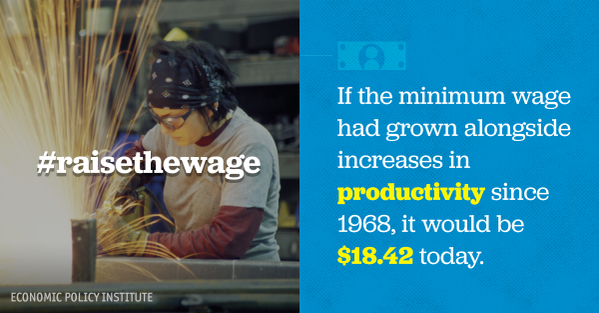
The Raise the Wage Act would give nearly 20 million women—30% of all working women in the U.S.—a raise #RaisetheWage#12by2020
Today, right now, the House is debating the war against ISIS, almost a year after it began, well past the 60 day limit of the War Powers Act. Watch live here or go to the beginning around 1 hour 26 minutes Here is the Legislative Digest Here is the rule on the bill Here is the Rep Barbara Lee AUMF that will actually defeat ISIS Follow Live Tweets from @winwithoutwar
Last month I wrote about the business of police body cameras, not really getting much attention in the debate around police reform. The main point of the article was that I found this from the 2014 annual report on PDF page 36 footnote 9 click here for larger photo of the below table
Here is footnote 9, explaining when Luke Larson, Chief Marketing Officer and President of TASER since April 6th 2015 and is an Iraq war veteran, would get 10,000 "Number of Unearned Shares, Units or Other Rights That Have Not Vested"
(9) These stock awards are performance-based, and vest in full when a specified threshold is met related to camera video uploads into EVIDENCE.com
Another footnote, #6, applies to Patrick W. Smith, Daniel M. Behrendt, Douglas E. Klint, and Marcus W.L. Womack. These stock shares are related to revenue growth. Only Luke Larson gets shares based on how much video evidence is uploaded to https://www.evidence.com/
(6) These stock awards are performance based. The number of shares that ultimately vest is based upon the compounded annual revenue growth rates for the total Company and the AXON segment compared to target for the three-year period 36 ending December 31, 2016. The number of unvested shares presented equals the target shares. Reference is made to the “Executive Compensation – Performance-based Compensation Plans” section above for further information about these awards.
There has also been a lot of activity in Congress related to body cameras for police, including today's House amendment 295, "Supporting local law enforcement agencies in their continued work to serve our communities, and supporting their use of body worn cameras to promote transparency to protect both citizens and officers alike." It cites a study where
University of Cambridge’s Institute of Criminology conducted a 12-month study on the use of body-worn cameras used by law enforcement in the United Kingdom and estimated that the cameras led to a 50 percent reduction in use of force, and in addition, complaints against police fell approximately by 90 percent
The House was in session until almost 2am last night (Wednesday) discussing the 2016 NDAA, which I learned later Obama has threatened to veto regarding a disagreement with Republicans over ending sequestration, which is hilarious because Republicans love to hate it. (Rigell, McCain, McCain talks sequestration in relation to catfish). Sequestration was discussed a lot in confirmation hearings for both Defense Secretary Ashton Carter and Attorney General Loretta Lynch. There were many different amendments, (this is just some of them) discussed and voted on, but I want to discuss here recent police body camera amendments, some from last night and others recently passed. I wrote about body cameras last month, discussing the business side that is not discussed much in the news. Just as a reference here are all the votes for the current House of Representatives. For daily references to votes and amendments click here for the Republican CloakRoom OK, now for the policies.
Here is text of the amendment. The text is very general in my opinion, basically just supporting the work police do and the role body cameras could play, referencing a study from England's Cambridge University. Rachel Levinson-Waldman of the Brennan Center for Justice told me that it was a good point and important that this was in there
(3) encourages State and local law enforcement agencies to consider the use of body-worn cameras, including policies and protocols to handle privacy, storage, and other relevant concerns.
Rachel will participate in an event discussing privacy policy and police body cameras on June 25th. She also found redacted body camera footage from Seattle PD as part of a pilot program.
It looks like they're experimenting with different styles and levels of redaction.
Additionally, Rep Hank Johnson introduced two amendments, one regarding transfer of MRAPs to local police, and one to prohibit transfer of flash-bang grenades to local police. (Turns out like Tasers which kill, flash-bangs are also lethal weapons). Here Rep Johnson discusses the amendment, which according to voice vote fails, and the recorded vote is postponed.
On June 2, Rep Joaquin Castro introduced an amendment to HR 2578 (see my post on CJS here) related to funding police body camerasAnd then there is Rikers prison in New York. Last week Kalief Browder committed suicide, who was imprisoned at Rikers for 3 years with no charge, accused of stealing a backpack. He was released in 2013, but had attempted to kill himself several times before. Democracy Now! interviewed journalist Jennifer Gonnerman, who wrote about him last year for the New Yorker.
Then there is Mayor de Blasio, who after the death of Kalief finally promised reforms that he should have done last year when the story of Kalief first made news.
New York City Mayor Bill de Blasio says a young man who committed suicide after he was imprisoned for three years at Rikers Island jail without charge did not die in vain. Kalief Browder was just 16 years old when he was jailed at Rikers without trial on suspicion of stealing a backpack. He maintained his innocence, but was only offered plea deals while the trial was repeatedly delayed. The case was finally dismissed. On Saturday, Browder took his own life at the age of 22. Speaking at a news conference, de Blasio mourned him.
Bill de Blasio: "There is just no reason he should have gone through that ordeal, and it’s a tragedy and it has touched so many of us and it’s going to lead to change. I wish we had not lost him. This is a tragic loss, but once his story became public it caused a lot of people to act, and a lot of the changes we are making at Rikers Island right now are a result of the example of Kalief Browder. So I wish, I deeply wish we hadn’t lost him, but he did not die in vain."
And now with the attention focused on Rikers, there are more stories.
The House proposal significantly underfunds agencies, programs, and services that are critical to ensuring that the justice system works, and that the civil rights of all Americans are upheld.
Several notable amendments were passed, including
Three @RepThomasMassie amendments to protect hemp cultivation, gun rights & electronic privacy just passed House w/ overwhelming majorities.
I am wondering if it is necessary to include FBI in this amendment, which prohibits NSA and CIA (but doesn't mention FBI) from weakening encryption standards with NIST (see also here). I mentioned NIST in my post on the iPhone encryption. Representative Joaquin Castro introduced funding for police body cameras. I sent him my article on TASER.
This afternoon I will offer an amendment to the CJS appropriations bill to increase funding for police body cameras by $10M.
Amendment Offered by Ms. Moore

  Ms. MOORE. Mr. Chair, I have an amendment at the desk.
  The Acting CHAIR. Is there objection to the gentlewoman        offering the amendment at this point in the reading?
  There was no objection.
  The Acting CHAIR. The Clerk will report the amendment.
  The Clerk read as follows:

       Page 34, line 19, after the dollar amount, insert
     ``(reduced by $2,000,000)''.
       Page 42, line 24, after the dollar amount, insert
     ``(increased by $2,000,000)''.
       Page 44, line 8, after the dollar amount, insert
     ``(increased by $2,000,000)''.

  The Acting CHAIR. Pursuant to House Resolution 287, the gentlewoman from Wisconsin and a Member opposed each will control 5     minutes.
  The Chair recognizes the gentlewoman from Wisconsin.
  Ms. MOORE. Mr. Chair, my amendment transfers $2 million into   the Mentally Ill Offender Treatment and Crime Reduction Act for  the purpose of expanding and improving police training to safely and appropriately respond to mentally ill individuals.
  Now, Mr. Chair, we have heard a lot lately in the news about   high profile police-involved shootings that have become a major  subject here around the country and here in Congress. Not        surprising to some of us, especially those of us who hail from   large urban cities, this is a widespread problem that has been   around for a while.
  But today, I am offering this amendment to highlight one       serious issue that I think should be a major part of our current national dialogue: ensuring that police have adequate training to identify persons with mental illness and to safely, when it is  possible, resolve encounters during a crisis.
  Mr. Chair, indulge me for a moment while I tell you a story    about a 31-year-old man in my home district of Milwaukee,        Wisconsin, who, unfortunately, is no longer with us today. His   name was Dontre Hamilton.
  Dontre, like many people in this country, suffered from a      mental illness. He was diagnosed with schizophrenia 1 year prior to the incident and had been off his medication due to an        insurance issue.
  On April 30 of last year, Dontre was taking a nap on a public  park bench when employees of a nearby Starbucks called the       police. Two police officers came and did a wellness check and    left the scene, discerning that Mr. Hamilton was no threat to himself, nor to anyone in the park or the public.
  Soon thereafter, yet another call came from the Starbucks      employee because this gentleman was sleeping on the public park  bench. Another police officer, Officer Manney of the Milwaukee   Police Department, arrived and started to pat down Dontre. This  pat-down turned into a struggle, and Officer Manney pulled out   his baton to help him subdue Mr. Hamilton.
  The struggle escalated, and Dontre got control of the baton and swung it at Officer Manney. This caused Officer Manney to draw  his firearm and shoot 14 bullets into Dontre Hamilton.
  Officer Manney was terminated for conducting a pat-down in
contravention of his training on dealing with mentally ill individuals but faced no charges in the death of Dontre Hamilton.
  Mr. Chair, perhaps this tragedy could have been prevented. Too often, our mental health infrastructure is woefully inadequate   for many Americans. A lack of treatment can turn a treatable mental illness into a severe debilitating condition. Many can't hold a job or pay rent.
Many end up homeless on the streets. In fact, more than 124,000  of the 610,000 homeless people in the United States suffer from a severe mental illness.
  As a result of many failures in our system, our Nation's policeofficers have de facto become our country's first responders to  crisis calls, including those individuals experiencing mental    illness. Too often these calls, many intended to be out of       concern  for the individual in crisis, become a tragic fatality.
  As we know, mentally ill persons are not generally dangerous,  Mr. Chair. In fact, they are actually more likely to become      victims themselves than actual perpetrators of violence. Many of these tragic encounters could be prevented if police officers are trained and follow proper procedures.
  The Mentally Ill Offender Treatment and Crime Reduction Act is an important Federal initiative and tool that will help us bridge this gap. This law established a grant program called the       Justice and Mental Health Collaboration Program which helps      States and localities develop collaborative approaches to dealing with the intersection of criminal justice and mental health     systems.
  One of the authorized grant uses under the program is training to police officers for exactly these purposes: to safely respond to crisis calls and limit the chance of a tragic and often preventable consequence.
  I yield back the balance of my time.
  Mr. CULBERSON. Mr. Chairman, I claim the time in opposition,   but I am not opposed to the amendment.
  The Acting CHAIR (Mr. Woodall). Without objection, the         gentleman from Texas is recognized for 5 minutes.
  There was no objection.
  Mr. CULBERSON. The gentlewoman has a good amendment, and I want to encourage Members to support it.
  I yield back the balance of my time.
  The Acting CHAIR. The question is on the amendment offered by  the gentlewoman from Wisconsin (Ms. Moore).
  The amendment was agreed to.
I've been watching some of the debates around the Keystone XL pipeline and I wanted to say some things about the Franken Amendment, which requires that if built, steel for the pipeline be made in America, which sounds good for jobs, but with the environmental consequences is just making sure American companies profit from making more money on global warming. But Republicans killed the amendment (I think) because of a caveat placed in the bill about cost
The American-made steel debate will be familiar to those who paid attention to Franken's re-election campaign last year. Franken has said he opposes bypassing the regulatory process for Keystone, but, either way, it should be constructed with American steel. During the campaign his Republican opponent, businessman Mike McFadden, said he didn't think that should be a precondition to constructing Keystone, a comment the DFL used against him throughout the campaign, especially on Minnesota's Iron Range.
Franken's amendment is short, requiring that: “to the maximum extent consistent with the obligations of the United States under international trade agreements, none of the iron, steel or manufactured goods used in construction of the Keystone XL Pipeline and facilities approved by this act may be produced outside of the United States.” The big caveat: the amendment wouldn’t apply if using American-made products would increase the price of the project by more than 25 percent.
(Purpose: To requie the use of iron, steel, and manufactured goods
 produced in the United States in the construction of the Keystone XL
                        Pipeline and facilities)

       After section 2, insert the following:

     SEC. __. USE OF UNITED STATES IRON, STEEL, AND MANUFACTURED
                   GOODS.

       (a) Limitation.--Subject to subsection (b), to the maximum
     extent consistent with the obligations of the United States
     under international trade agreements, none of the iron,
     steel, or manufactured goods used in the construction of the
     Keystone XL Pipeline and facilities approved by this Act may
     be produced outside of the United States.
       (b) Nonapplication.--Subsection (a) shall not apply to the
     extent that the President finds that--
       (1) iron, steel, and the applicable manufactured goods are
     not produced in the United States in sufficient and
     reasonably available quantities with a satisfactory quality;
     or
       (2) inclusion of iron, steel, or any manufactured good
     produced in the United States will increase the cost of the
     iron, steel, or any manufactured good used in the Pipeline
     and facilities by more than 25 percent.
Senate Democrats are pressing amendments to legislation that would approve the Keystone XL pipeline, arguing their proposals would "actually make it an American jobs bill."
Based on information from affected agencies, CBO estimates that enacting this legislation would have no significant effect on federal spending for regulatory activities related to the proposed pipeline. (Any such regulatory activities are subject to the availability of appropriated funds.) Enacting the legislation would not affect direct spending or revenues; therefore, pay-as-you-go procedures do not apply.
The Keystone XL Pipeline Approval Act contains no intergovernmental or private-sector mandates as defined in the Unfunded Mandates Reform Act and would impose no costs on state, local, or tribal governments.
so I am having a hard time finding out how much 100% American steel and iron would cost, if it would actually increase the price of the project by more than 25%.
Senator Franken talked about his amendment on the Senate floor
Congress has had a long history of using ``Buy American'' provisions in order to maximize the economic benefits of infrastructure projects. ``Buy American'' provisions ensure that more goods and manufactured items used in infrastructure and other projects are produced here at home. In fact, as recently as 2013 Congress passed a provision in the WRDA Act--the Water Resources Development Act--to require the use of iron, steel, and other domestically produced goods in water infrastructure projects. That is important because it means that we keep jobs and profits here at home instead of sending them abroad.
Unfortunately, there is no such requirement when it comes to construction of the Keystone XL Pipeline. In fact, according to TransCanada itself, half of the pipe for the U.S. portion of the pipeline would be sourced from foreign countries. And for the other half that would be put together here in the United States, much of the raw material, such as the steel that goes into the pipe, could be sourced from overseas. This is the problem our amendment addresses. Our amendment would require the use of domestic iron, steel, and other manufactured goods in the construction of the Keystone XL Pipeline, provided the material is readily available and affordable.
If adopted, the amendment would create jobs for iron ore miners, such as the ones across the Iron Range in my State of Minnesota. It would create more jobs for shippers who ship the ore across the Great Lakes or by rail or down the Mississippi River. It would create more jobs for our steelworkers who work in steel mills across this country.
At the same time, we specify in our amendment that these requirements would be implemented consistent with our trade agreements.
Some of my colleagues on the other side of the aisle have said we shouldn't put such restrictions on a private company. But we have to remember that this isn't your typical private company. The underlying bill to authorize the pipeline would throw out the established approval process for the construction of a cross-border pipeline by a foreign corporation. That means all of the important assessments regarding things such as safety and the environment that our Federal agencies might have made on this project are tossed by the wayside. So if Congress is going to intervene on behalf of this foreign company, then the least we can do is to make sure the company building the pipeline uses American-made iron and steel. This is a very pragmatic amendment . We all have different views on the approval process for this pipeline, and while I believe Congress should not circumvent the approval process we have in place, I think we can all agree that we want jobs here in America.
Alaska Senator Murkowski who supports Keystone, added that TransCanada already committed to using 75% American steel
This pipeline is a private project. This is not a federally funded infrastructure project. This would be the first time that Congress has directed or forced private parties to purchase domestic goods and materials.
We actually asked the Congressional Research Service to look into this to see if there was any other instance at the Federal level where private parties were told that they must purchase 100-percent domestic goods and materials, and so far the answer to that inquiry has been that they can find no instance of that.
I think we need to be careful about this as a precedent because if we are going to direct this particular project--the Keystone XL--to have this requirement on it, where do we go next? What will happen to the next project that we have? Will it be the next pipeline or the next renewable energy project? Where does this slippery slope go?
I think it is fair to note that TransCanada has made a commitment to have 75 percent of the pipes for this project come from North America, and fully half of that--more than 332,000 tons of steel will come from the State of Arkansas.
I am with the Senator from Minnesota. We want to make sure we get as many jobs as we absolutely can and make sure they are good-paying jobs--whether it is in steel making or widget making or welders. This is about jobs. This is what we want to do to encourage jobs. I think we need to be very cognizant of what this particular amendment would do. This amendment --for the first time ever--would direct a private entity to utilize all American-made products throughout the process of the construction. It is important to note that the American Iron and Steel Institute has been a strong supporter of the Keystone XL Pipeline. We have all received a letter--they called it a Steelgram--from the American Iron and Steel Institute. They let us know very clearly and in no uncertain terms that they support Keystone XL. They said it is essential that Congress act to ensure the approval of the Keystone XL Pipeline
When the Democrats insisted that this pipeline's product--the oil that is refined and used for consumption--be sold in the United States, the Republicans voted no. The Republicans voted no. I have a lengthy memo on my desk of all of the Republican Senators who have come to the floor insisting that the Keystone Pipeline was going to create more gasoline, more diesel fuel, and help the American economy. Yet, when Senator Markey of Massachusetts offered an amendment to say keep the products coming from the Keystone Pipeline in the United States, the Republicans, to a person, voted no.
Then Senator Franken came forward and said, Well, let's agree that if this is about jobs in America that the Keystone Pipeline will use American steel. That seems reasonable to me, and I voted for it. The Republicans voted no. They defeated the notion that we would use American steel to build this pipeline.
This pipeline is Senate Bill 1 for the Senate Republicans. It is their highest priority. One would think that if it truly is a jobs bill, they would want American steel to be used to build the pipeline; let our steel mills build this pipeline in the future, create the jobs in America, and they voted no.
Yesterday I offered an amendment as well. We know at the end of this pipeline, if tar sands reach the United States through this means or otherwise, it is a pretty nasty process taking the tar and sand out of the oil, and what is left over is a nasty product known as petcoke.
Petcoke is now being stored in three-story-high piles in the city of Chicago. I have seen it. And the city is trying to get to the point where it is at least contained and covered. Yet, the company that owns it, which incidentally is a company owned by the Koch brothers--what an irony--this company has resisted the idea of covering these petcoke piles, so this nasty black substance blows through the community in southeast Chicago. The city of Chicago is in a battle.
I tried to put in an effort yesterday so that we would establish standards for transportation and storage of petcoke, and the Republicans insisted it was a benign substance, it isn't hazardous, not dangerous, don't worry about it. If some of the Senators who voted against my amendment , tomorrow, God forbid, face this issue in their community, I think they will have a little different view of petcoke and what it can do to people, the impact it has on respiratory disease and asthma.
Yesterday I didn't prevail. But I can tell my colleagues how over the years, as I fought the tobacco companies and they insisted there was nothing dangerous about tobacco, I heard those arguments from industry just as we are hearing the petcoke arguments from the petcoke industry. Ultimately, good sense prevailed, public health prevailed, and we moved toward regulation of tobacco products. We should do the same--basic regulation--to protect the public from any negative impact on their health relative to petcoke.
@biasedreporter@carwinb Police probably killed more than
est 2,337 which does not include those killed on prison plantations by
guards
— Black Talk Radio (@blacktalkradio) August 22,
2014
It is
important to realize a few things while looking at this list. It is only a
partial list, and it is only a list of those killed by police, and does not
include any injuries by gun or other weapon. I am also assuming that Border
Patrol numbers are not included as "police" in this list. It was also mentioned
that the list does not include anyone killed in prisons, again not mentioning
injuries in prison either.
Since the
increased attention to police brutality after the killing of Mike Brown there
have been other stories of people killed in police custody. On October 17 Democracy
Now! went to Denver to cover the elections, and spent a lot of the hour on
police brutality cases there as well, including Marvin Booker.
As Denver
faces a string of police brutality cases, a federal jury has awarded a historic
$4.6 million in damages to the family of a homeless preacher killed while he was
in the booking area of the Denver jail. Marvin Booker died after he was grabbed
and then piled on by a team of officers who handcuffed him, put him in a
chokehold and tasered him. The coroner ruled his death a homicide, but
prosecutors declined to charge the deputies involved, and Denver Sheriff
Department officials never disciplined them, saying Booker could have harmed
someone and that force was needed to restrain him. The case highlights a history
of alleged misconduct by the police department, and has added momentum to calls
for reform both locally and nationwide in the aftermath of calls for justice in
the killing of unarmed teenager Michael Brown by an officer in
Ferguson.
Democracy
Now! also discussed other cases of police brutality in Colorado,
including Isaiah Moreno, a man who was tasered by two officers while he is
sitting down not doing anything, and then after he is tasered they tie him to a
restraining chair and leave him there, and Anthony Waller, who ironically with
the name "Waller" was slammed into a wall in court in front of a judge while
shackled, again without provocation.
In the 47
minute long video, the prison guards laugh, joke, and mock this helpless and
shackled schizophrenic man as he dies alone on the floor in front of
them.
continued
Three
employees have been fired, and five others disciplined. No criminal charges were
filed.
If Fyodor
Dostoyevsky was correct in stating that you can judge a society by how well it
treats its prisoners, this video is a very horrific display of what our society
has become. We can do better.
Then
there are the "shot himself in the head while handcuffed behind his back"
stories as well. In the case of Chavis
Carter, an autopsy showed drugs in his system, and police reenacted what
they say happened.
(still photo from police
re-enactment video)
The
report said Carter's death was ruled a suicide based on autopsy findings and
investigative conclusions from the Jonesboro Police Department, which has faced
questions from Carter's family and community members about the circumstances
surrounding the July 28 shooting.
He was
cuffed and placed into a police car, where apparently he produced a weapon, and
despite being handcuffed, shot himself in the head,' the report
said.
requires
States and Federal law enforcement agencies to report information to the
Department of Justice on the deaths of individuals in the custody of law
enforcement.
**(While
this blog post discusses a new law requiring more transparency from DHS, Obama
also signed S. 2651, the "DHS OIG Mandates Revision Act of 2014," which
eliminates three separate reporting requirements of the Department of Homeland
Security's Office of Inspector General) more on this bill
later)**
The bill
reinstates a reporting requirement that sunsetted in 2006, but as Mother Jones
reports, previous
bills have had little impact in providing data in the past
if past
measures to collect similar data are any indication, it's going to be a long
time before Washington reliably keeps a comprehensive database of all citizens
who die at the hands of the police. Congress has tried to enact similar laws
before: In 1994, a statute passed under the Violent Crime Control and Law
Enforcement Act mandated that the Department of Justice annually gather, report,
and publish a summary of public data counting uses of "excessive" force, but
nothing much came of the plan. At some point the task of collecting data fell to
the International Association of Chiefs of Police, a professional organization.
They maintained a database until 2001, but have not updated it since. Twenty
years later, we have no clear understanding of how many people have been killed
by police.
Older
versions of the Death in Custody Reporting Act have also struggled to compel
comprehensive data. The bill passed last week is the reauthorization of the
original act, passed in 2000. Initially created in reaction to prison
confinement deaths—lawmakers inserted a provision requiring tallies of
arrest-related deaths in 2003—that first version accomplished little: Several
years passed before states started sending in data, and the bill expired shortly
thereafter, in 2006, without a single report having been released. Since then,
the provision requiring state counts of arrest-related deaths has stayed on the
books—but reporting has never been enforced. Many local law enforcement agencies
provide incomplete data, and the Justice Department has published no
comprehensive reports in more than a decade.
The bill
that passed last week aims to force reporting by tying law enforcement funding
to cooperation: States that fail to report police-involved killings can lose up
to 10 percent of their federal law enforcement grants. However, it's up to the
attorney general to mete out fines. "Hopefully there will be better compliance
and enforcement than existed then, and also more cooperation," Blumenthal
says.
There is
some good news though, and that is that even when the law requiring reporting
data expired, collection continued as we learn from a 2011 report
evaluating data reported to the DOJ from 2003-2009 see on page 15, although I
don't think that the new law requires retroactive release of this data, and I
wonder where data collected in the past is.
Since the
expiration of the DICRA legislation in 2006, BJS has continued to collect ARD
data, but no longer requires quarterly submissions.
Even in
light of the criticism from Mother Jones of what is missing from the data, the
analysis from 2011 is still staggering, as the press release
outlines.
From 2003
to 2009, a reported 4,813 persons died during or shortly after law enforcement
personnel attempted to arrest or restrain them, the Bureau of Justice Statistics
(BJS) announced today.
The 1,187
state and local law enforcement agencies employing 100 or more full-time sworn
personnel accounted for 64 percent of full-time sworn personnel (490,269) and
represented seven percent of all such agencies nationwide in 2008. These
agencies accounted for 75 percent (3,613) of all reported arrest-related
deaths.
Page 2 tells us that
the 1,187 agencies that employ 100 or more full-time sworn personnel are 7% of
the total.
While I
agree with Mother Jones' article that past laws have not produced comprehensive
databases, I am glad that we have a new law requiring data to be reported once
again.
As the
country with the highest per capita prison population, with more than 2.2 million people in
jail as of 2013 and more than 6.8 million under some
form of "adult correctional systems" such as parole or probation, until the prison abolition
movement catches on with greater popularity, any law that requires reporting
of data is better than relying on journalists who have to look and search and
hope to find out what is happening.